
Drywall Repair & Installation in Homestead, FL
Excellent on 
★ 5.0 out of 5 based on 10 reviews

Drywall Repair & Installation in Homestead, FL
GXG Remodeling handles drywall repair and installation for homeowners across Homestead, Leisure City, Florida City, Princeton, Naranja, and every other city we serve in South Miami-Dade: holes, cracks, screw pops, ceiling patches and new walls for a remodel, finished smooth and paint ready.
Drywall in South Florida lives a different life than drywall up north. Most homes in Homestead and South Dade are concrete block (CBS) construction, the air is humid for most of the year, and hurricane season tests every roof, window and door opening. This page covers what damages drywall here, what a good repair involves, what it costs, and the cases where patching is the wrong fix.
Drywall Repair Cost in Homestead, FL
General Industry Ballpark
$150 to $1,200 per repair
A general market ballpark for the Homestead area, not a GXG quote. A small patch lands at the low end; ceiling work, texture matching or water damage push it higher. Request a free estimate for pricing specific to your project. Every project is custom.
Small hole (doorknob dent, nail pop)$150 to $350
Larger hole or damaged section$350 to $700
Crack repair$300 to $800
Ceiling repair$400 to $1,500+
Full room re-drywall$1,200 to $3,000
New installation (per sq ft, installed and finished)$1.50 to $3.50
These ranges are general industry ballparks, shown for education only, not a GXG quote. Every project is custom, so your real price comes from a free estimate.
These are estimates, not a quote, and prices vary with materials, the season and the scope of the work. Texture, ceiling height, access and hidden damage move the number most. For the full breakdown, see our drywall repair cost guide, then call (786) 724-5571 or request a free estimate.
What Damages Drywall in South Florida
- Humidity swings. Framing lumber shrinks and swells with moisture, which backs out screws and nails and opens joints. That shows up as screw pops and hairline cracks at corners and door heads, and it is usually cosmetic.
- Leaks. Roof, window and plumbing leaks stain and soften board. A stain with a soft or sagging spot is a water problem, not a paint problem.
- Impact and everyday wear. Doorknob dents, furniture, and holes left by removed shelves, TVs and fixtures.
- Storm aftermath. Wind-driven rain around windows, doors and the roofline can wet walls and ceilings even when nothing looks broken from outside.
- Remodel work. Moved walls, new openings, removed soffits and updated windows all leave drywall to patch or install.
Wet Rooms: Mold-Resistant Board, Not Waterproof Board
In bathrooms, laundry rooms and other humid areas, ask about paperless, fiberglass-faced gypsum board for new or replacement panels. Without a paper face, mold has less to feed on. It is mold resistant, not mold proof, and it is not waterproof: it does not replace a shower membrane, a working exhaust fan or fixing a leak. Inside a tiled shower, the backing and waterproofing are a tile question, covered on our bathroom remodeling page. Visible mold in Florida is a separate job: mold assessment and remediation are licensed work, so large or recurring growth should go to a specialist before anyone patches over it.
Window Openings and Hurricane-Season Repairs
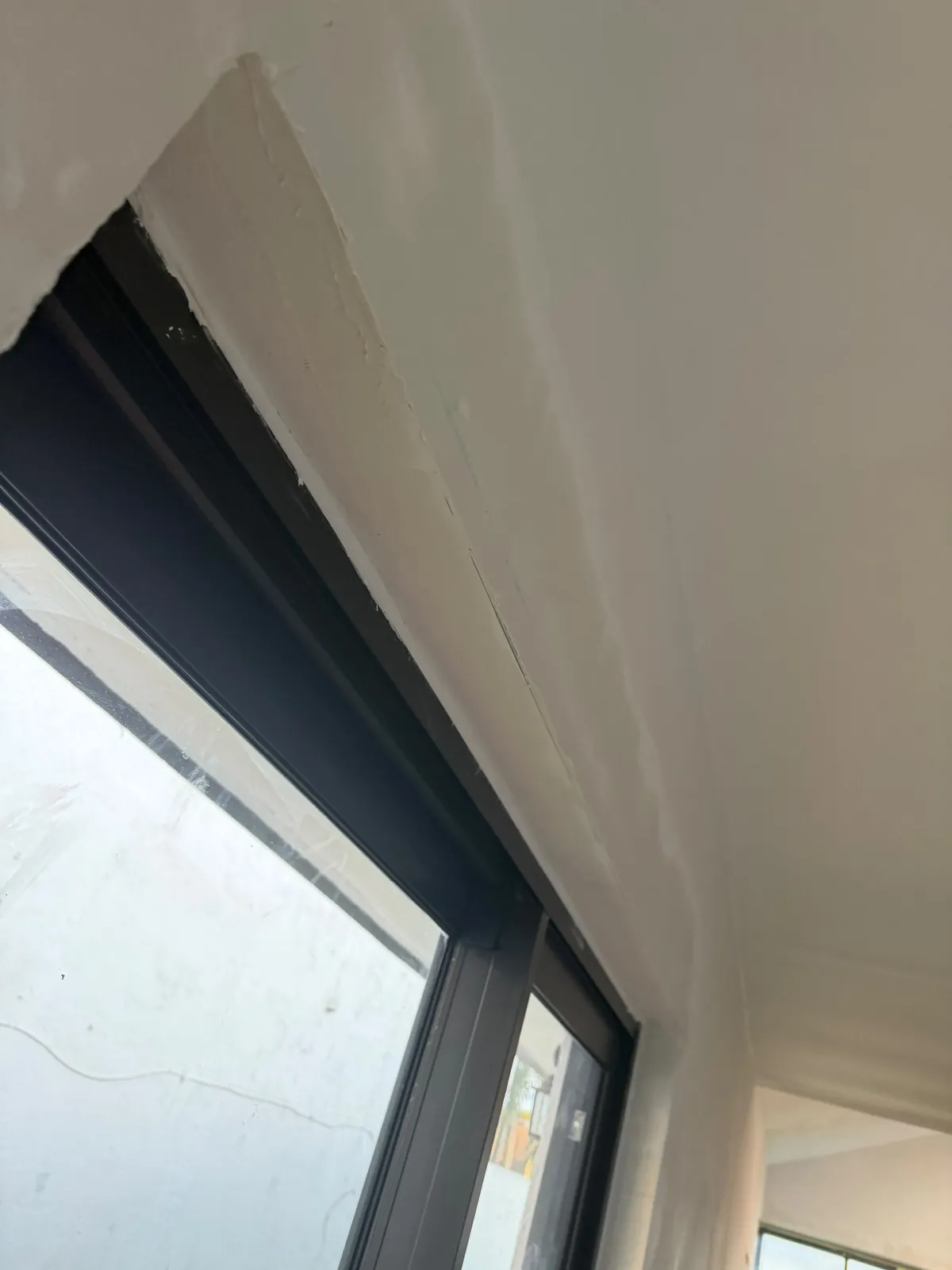
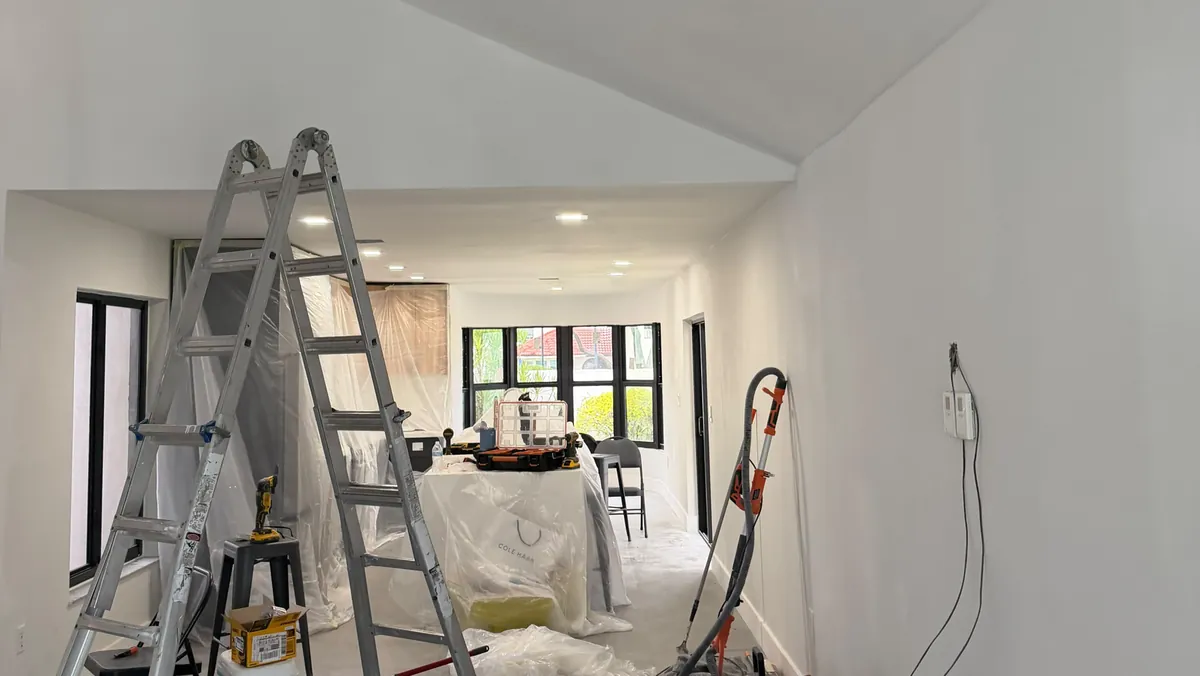
Window and door openings are where drywall work and hurricane-era construction meet. Replacing windows leaves the interior returns (the drywall around the opening) cut, chipped or missing, and those edges have to be rebuilt, taped and finished before paint. The photos above show that stage: finishing around a window opening before paint. If you are planning new windows, see window installation and our window installation cost guide.
After a storm, the order matters: make the roof or opening watertight first, let the walls and ceiling dry and confirm it with a moisture meter, document the damage with photos for any insurance claim, and only then repair drywall, texture and paint. Doing the interior first risks doing it twice. We do not handle roofing or emergency water extraction.
Hole and Crack Repair: How It Is Done Right
- Small holes (nail holes, dents) are filled and sanded flat. Larger holes are cut square and patched with new board fastened to framing or backing.
- Cracks need the cause identified. Corner and joint hairlines are taped and recoated. A crack that keeps reopening, widens, or appears with sticking doors is worth having inspected rather than patched again.
- Screw and nail pops are re-seated or replaced, then recoated and spot primed, not just painted over.
- Joint compound goes on in thin layers, sanded between coats, then all new compound is primed so it does not flash (show as a dull or shiny patch) under paint.
Texture Matching: Orange Peel, Knockdown or Smooth
Texture is where patches give themselves away. A smooth wall needs the repair feathered wide and sanded flat. Orange peel and knockdown are applied over the repair after the compound is dry and primed, and the pattern size, density and flattening have to match the wall around it. Older homes can have hand-applied patterns that need a test patch before they look right. If you are not sure what you have, ask us to look at it in raking light before anyone sprays anything. Where a wall catches strong window light, we also recommend painting the full wall to a natural break so the patch does not show. See interior painting.
Level 4 vs Level 5 Finish
Drywall finish is graded in levels (Gypsum Association GA-214). Level 4, the common residential standard, has two coats of compound over flat joints, one over interior angles and three over fasteners, finished smooth, and suits flat paint and light texture. Level 5 adds a thin skim coat over the whole surface, which hides the difference between paper and compound. It is commonly recommended for glossier paint, dark colors, and walls with strong low-angle light, such as long walls beside big windows. Level 5 costs more because it adds a step, so ask any contractor which level your quote includes and why.
When It Is Water Damage, Not a Drywall Repair
- Brown or yellow stains, a musty smell, or paint that bubbles or peels
- Board that is soft, crumbling or sagging, especially a ceiling that bulges or drips
- Staining that returns after you have painted over it
- Wet or damp readings on a moisture meter, even where the surface looks fine
If any of these apply, the leak and drying come first, because patching over active moisture means paying for the same repair twice. A sagging ceiling is a safety issue: keep people out from under it and call a professional. See our water damage repair page and, for overhead damage, ceiling repair.
When Drywall Repair Is the Wrong Fix
- Active leak or wet framingFix the source and dry the wall first.
- Visible or recurring moldThis needs a licensed mold specialist, not a patch.
- A crack that keeps growing, especially with sticking doors or a visible shift: have the cause looked at before cosmetic repair.
- A popcorn ceiling you plan to removeSequence the work so you do not finish a ceiling twice. See popcorn ceiling removal.
- Many small repairs across one wallRe-skimming or replacing the section can look better than a dozen patches.
Permits for Drywall in Miami-Dade
Miami-Dade County's permit exemption list says repair work performed by a licensed contractor that does not alter the existing condition, is not structural (interior or exterior), does not change the approved occupancy, does not affect life safety, and stays under the county's small-repair dollar limit (confirm the current figure with the building department) does not need a building permit. Interior and exterior painting is also exempt. That covers most small patching, but a larger job or one that goes past the dollar limit is not covered. New walls, moved openings, and drywall tied to electrical, plumbing or structural work may need a permit, and rules can differ between the unincorporated county and city building departments such as Homestead and Florida City. Ask any contractor to confirm with the building department for your address, and to tell you in writing who pulls any permit.
What's Included
- Hole, crack and screw-pop repair
- Water-damaged section replacement, once the source is fixed
- New drywall installation for remodels
- Texture matching to the surrounding wall
- Priming of new compound, ready for paint
Our Process
- Free in-home estimate and moisture check where needed
- Cut out damaged drywall and frame the patch
- Tape, joint compound and sanding, in layers
- Texture matched to the surrounding wall
- Prime and final walkthrough, ready for paint
Questions to Ask Any Contractor
- How far back will you cut the damaged board, and will you check for moisture first?
- Which finish level is included, Level 4 or Level 5?
- Is texture matching included, and which texture do you think I have?
- Is stain-blocking primer included, and is the full wall or ceiling painted or only the patch?
- Is the quote itemized and in writing, and what happens if hidden damage is found?
- Does this job need a permit, and who pulls it?
Frequently Asked Questions
How much does drywall repair cost in Homestead, FL?
As a general market ballpark, not a GXG quote, repairs commonly fall between $150 and $1,200. A small hole usually runs $150 to $350, a larger damaged section $350 to $700, crack repair $300 to $800, and ceiling repair $400 to $1,500 or more. A full room re-drywall runs roughly $1,200 to $3,000, and new installation about $1.50 to $3.50 per square foot. These are estimates that vary with materials, season and scope. See the cost guide. Every project is custom, so your real price comes from a free estimate.
Do I need a permit for drywall repair in Miami-Dade County?
Miami-Dade's permit exemption list covers repair work by a licensed contractor that does not alter the existing condition, is not structural, does not change occupancy, does not affect life safety, and stays under the county's small-repair dollar limit (confirm the current limit with the building department). Most small patching fits that. New walls, moved openings, or drywall tied to electrical, plumbing or structural work may need one. Ask any contractor to confirm with the building department for your address.
Can water-damaged drywall be saved?
Sometimes. Firm board that is only stained and reads dry on a moisture meter can often be sealed with stain-blocking primer and repainted. Board that is soft, sagging, crumbling or moldy generally has to be cut out and replaced, after the leak is fixed. See water damage repair.
Can you match an existing wall texture?
Yes. We match smooth, orange peel and knockdown so the repair does not stand out once painted. Older or hand-applied patterns may need a test patch first, and we often recommend painting the full wall so the patch does not flash.
What is mold-resistant drywall, and do I need it in a bathroom?
It is gypsum board with a fiberglass or treated face instead of plain paper, so mold has less to feed on. It is worth asking about for bathrooms and other humid rooms, but it is not waterproof and does not replace a working exhaust fan, a shower membrane or fixing leaks.
What is the difference between Level 4 and Level 5 drywall finish?
Level 4 is the common residential standard: two coats of compound over flat joints, one over interior angles and three over fastener heads, finished smooth. Level 5 adds a thin skim coat over the whole surface and is commonly recommended for glossy paint, dark colors and walls with strong side light. Ask which level your quote includes.
Why do cracks and screw pops keep coming back in my house?
Framing lumber moves with humidity and settling, which backs out fasteners and opens joints. Re-seating the fastener and recoating usually fixes a pop. A crack that keeps reopening, widens, or appears with sticking doors is worth having inspected instead of patched again.
Should I use joint compound or spackle to fix a hole?
Lightweight spackle is fine for nail holes and small dents. Anything larger, or any seam, is normally repaired with joint compound, which is built up in thin coats and sanded. Spackle alone on a big patch tends to shrink and show through paint.
Should I use paper tape or mesh tape on drywall repairs?
Both are used. Paper tape is common on seams and inside corners, while self-adhesive mesh is often used on patches. The right choice depends on the compound and the repair, so ask your contractor what they use and why.
How big a hole in drywall can be patched?
Small holes can be filled, and larger ones are cut square and patched with new board fastened to framing or backing. Once damage spans much of a wall or ceiling, replacing the section is often cleaner than stacking patches.
Can I just paint over a drywall patch?
Not directly. New joint compound is more porous than the paper around it, so it is primed first so the patch does not flash under paint. Texture also has to be matched before painting.
Do drywall repairs need a licensed contractor in Miami-Dade?
The county's repair exemption refers to work by licensed contractors, so ask any contractor for their license and confirm with the building department whether your job needs a permit. See also our cost guide.
Small patch or a full room of new drywall, we give you a written estimate up front. Call (786) 724-5571 or request a free estimate to get started.

Our testimonials say
What Homestead Homeowners
Are Saying
5.0 out of 5, based on 10 reviews
"GXG Remodeling repainted our whole exterior and it held up perfectly through the first rainy season. Clean job site, showed up on time every day."


"We had our kitchen cabinets painted instead of replaced and they look brand new. Saved us thousands and the crew was professional start to finish."

"Fast, honest, and the price matched the written estimate exactly. Would call GXG again for our next project."

"Professional from the first call to the final walkthrough. Our home looks brand new."
"Great communication throughout the whole project and the crew cleaned up every day before leaving."
"Would recommend GXG to anyone in Homestead looking for quality work at a fair price."