
Flooring Installation in Homestead, FL
Excellent on 
★ 5.0 out of 5 based on 10 reviews
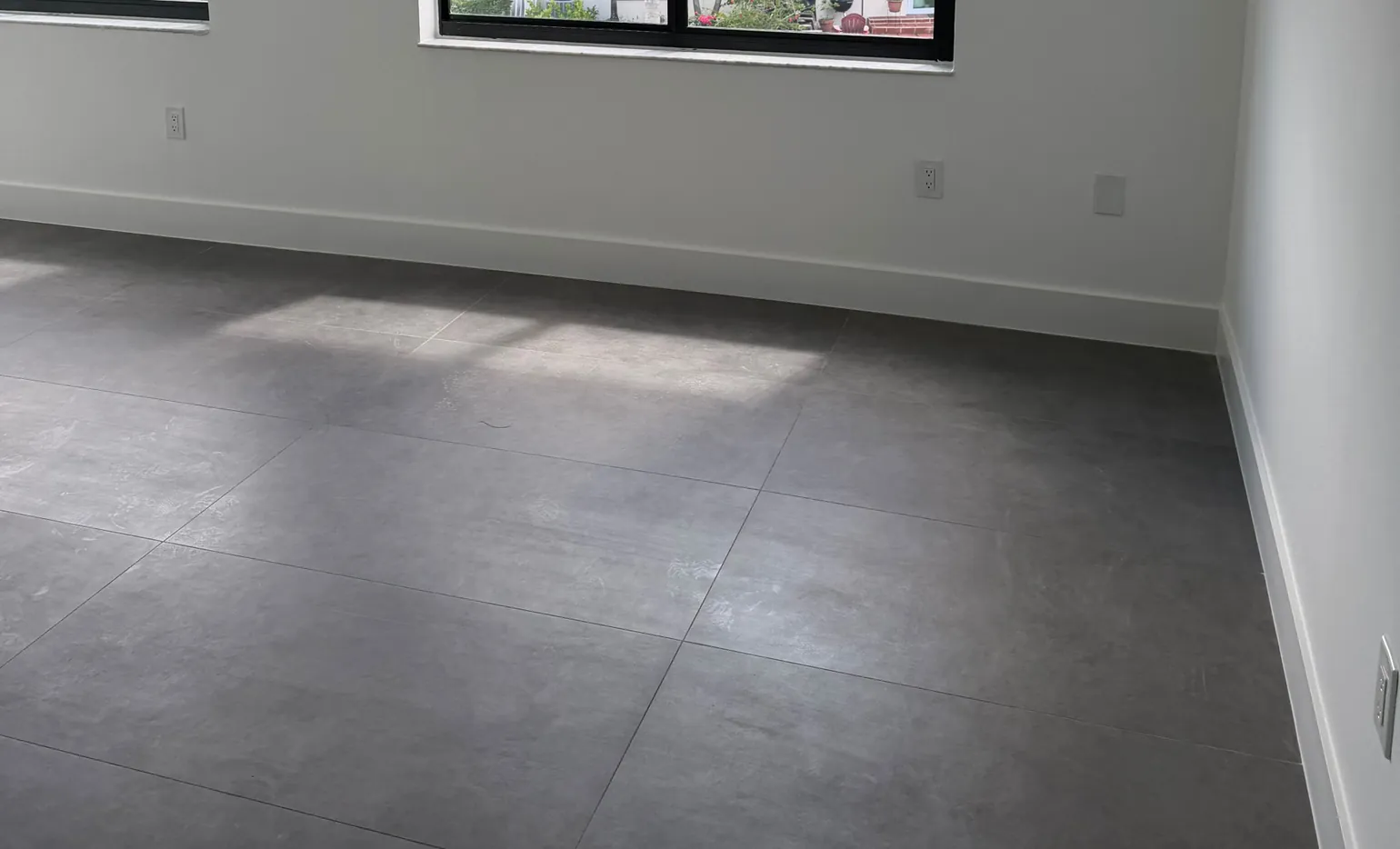
Flooring Installation in Homestead, FL
Most flooring problems in South Florida do not start with the flooring. They start with what is underneath it: a concrete slab that is not flat, not dry or both. GXG Remodeling installs tile, luxury vinyl plank and other flooring for homeowners in Homestead, Leisure City, Florida City, Princeton, Naranja and every other city we serve in South Miami-Dade, and we plan each job around the slab first and the finish second.
Homes here are mostly concrete block construction on a slab, in a humid climate with a long hurricane season. That combination is why tile and vinyl plank dominate local floors, and why wood and laminate need more caution than they would in a drier state.
Flooring Installation Cost in Homestead, FL
General Industry Ballpark
$2 to $15 per sq ft
Estimates. Your exact price depends on material, square footage, and subfloor condition. Request a free estimate for pricing specific to your project. Every project is custom.
Luxury vinyl plank (per sq ft)
$4.50 to $12
Laminate (per sq ft)
$3 to $8
Tile, ceramic to natural stone (per sq ft)
$5 to $15
These ranges are general industry ballparks, shown for education only, not a GXG quote. Every project is custom, so your real price comes from a free estimate.
These are estimates, not a quote, and prices vary with materials, the season and the scope of the work. The only way to get an accurate number is a walkthrough. Call (786) 724-5571 or request a free estimate.
For how these numbers add up by room size, removal and extras, see our flooring installation cost guide. Reported figures for removal vary widely, and bonded tile on a slab can cost more to remove than carpet or vinyl.
Why Tile and Vinyl Plank Dominate South Florida Floors
- Porcelain and ceramic tileDoes not absorb moisture, stays cooler underfoot in summer and handles a slab that runs damp better than most materials. The tradeoffs are slower installation, a dusty removal later and a stricter flatness requirement.
- Luxury vinyl plankWater resistant, quick to install and more forgiving of small slab imperfections. It is not harmed by humidity itself, but moisture trapped beneath it can cause trouble, so the slab still matters.
- Engineered hardwoodLayered construction moves less than solid wood and can work in a conditioned home over a tested slab.
- Laminate and solid hardwoodThe most moisture sensitive. Laminate has a fiberboard core that swells, and solid wood cups and gaps with humidity swings. Many Florida retailers steer buyers toward engineered wood instead.
If you are weighing tile specifically, see our tile installation page and the tile installation cost guide.
The Slab Comes First: Moisture Testing and Flatness
Moisture does not only come from spills. It can rise through a concrete slab, and older slabs may have no effective vapor barrier under them. The standard in-slab method is ASTM F2170, which reads relative humidity from probes set into the concrete. An older surface test, ASTM F1869 (calcium chloride), measures moisture vapor emission rate and is still cited by some manufacturers. Many vinyl makers cap the reading somewhere around 75 to 85 percent, and the manufacturer's data sheet always has the final word. If a reading is over the limit, the usual options are a moisture-mitigation coating, a rated underlayment, a product with a higher stated tolerance or a different material.
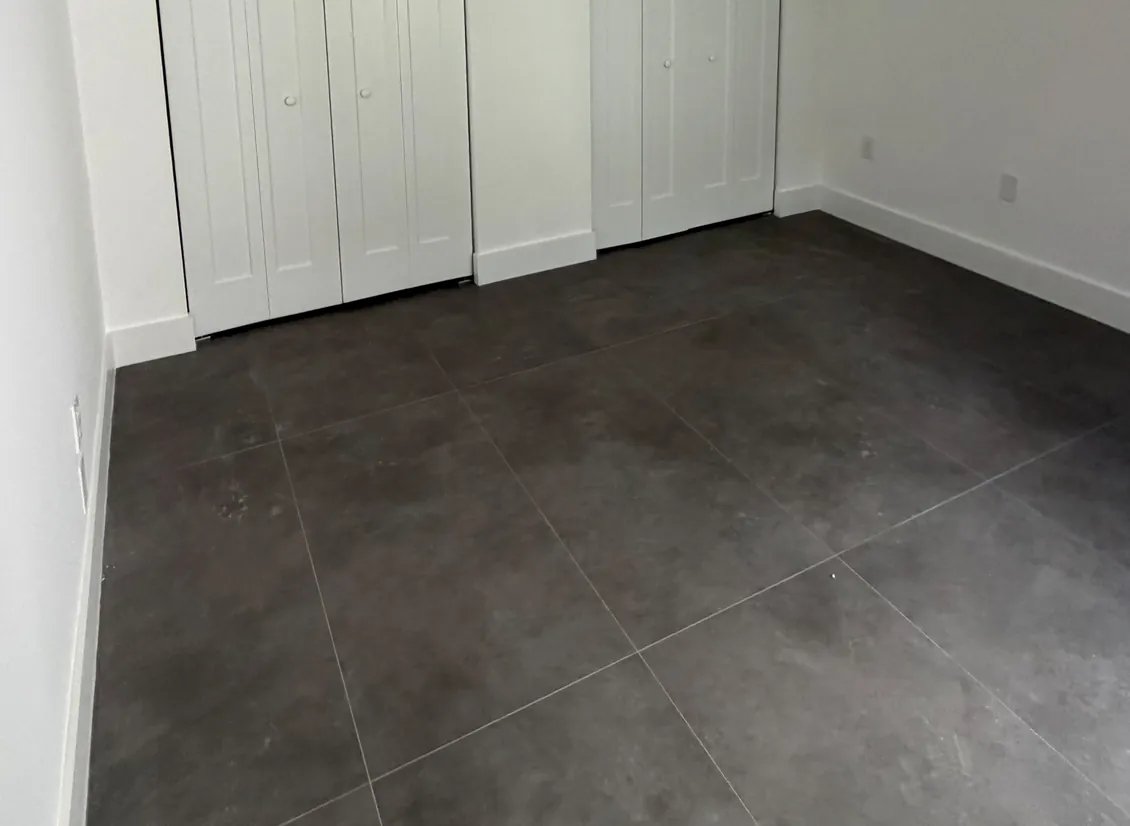
Flatness matters just as much. The ANSI tile installation standard (A108.02) limits substrate variation to 1/8 inch in 10 feet, and no more than 1/16 inch in 2 feet, for large-format tile, meaning tile with at least one edge 15 inches or longer. Smaller tile is allowed a looser tolerance, and vinyl plank and other floors have their own limits in each manufacturer's instructions. Large tiles bridge low spots instead of following them, so an uneven slab shows up as lippage, the edge-to-edge height difference you can feel with a bare foot. Low spots get filled with leveling compound that has to cure before the floor goes down, and high spots get ground down. Check the specific tile and setting material instructions, since they can be stricter.
Removal, Baseboards and Transitions
- Old flooring removalCarpet and vinyl come up quickly. Bonded tile on a slab is slow, noisy and dusty, and the debris needs to be hauled away. Ask for removal and disposal as separate lines.
- Baseboards and quarter roundUsually removed to set the expansion gap around a floating floor, then reinstalled or replaced. New trim costs more than reusing old, and painted trim needs touch-up. Our interior painting cost guide covers the paint side.
- TransitionsWhere the new floor meets a different material or height at a doorway, a reducer or threshold is needed. Added thickness from underlayment or leveling can affect door clearance.
- Expansion gapsFloating floors need room to move with temperature and humidity. The gap is covered by trim and should never be caulked solid.
Condos and HOAs: Sound Rules Come Before Materials
If you own a condo, check with your association before you buy anything. Many buildings require written approval before hard flooring replaces carpet, and some require a sound-rated underlayment and a manufacturer's test report for the exact floor assembly. The Florida Building Code sets a minimum impact rating of IIC 50 for floor and ceiling assemblies between dwelling units, or 45 if field tested. Many associations apply similar targets to replacement floors, and a hard surface over bare concrete usually needs an underlayment to get close. Buildings also set their own work hours, elevator reservations and insurance paperwork. Your association's rules, not a general summary, control what you need to submit.
When Replacing the Floor Is the Wrong Fix
- Water is still getting inNew flooring over a leaking pipe, a failing window or a roof leak will fail again. Fix the source first, see water damage repair.
- A few cracked or hollow tilesSpot repair may solve it. Widespread cracking can point to slab movement, which new flooring will not cure.
- The slab reads too wetA floor that cannot tolerate the reading needs mitigation or a different material, not a thicker underlayment.
- Only one room looks badA clean transition can make a single-room job reasonable, but matching an existing floor is often harder than it looks.
- The real goal is a refreshIf the floor is sound, new paint and trim may change the room more per dollar.
Questions to Ask Any Contractor
- Will the slab be moisture tested, who does it and what limit does my product allow?
- How flat will the slab be before install, and how is it being checked?
- Is removal, disposal, leveling, baseboard and transitions priced as separate lines?
- Does the square footage include waste, and will I get spare boxes from the same lot?
- Who gives the warranty, the manufacturer, the installer or both, and what does it require?
- If I live in a condo, will you work with my association on the sound requirements?
- Can you verify your Florida license and insurance? You can look up any contractor on myfloridalicense.com.
Our Process
- Free in-home estimate and material selection
- Slab and subfloor check, with moisture and flatness questions answered before ordering
- Old flooring removal
- Leveling, cure time and underlayment where needed
- New flooring installation, baseboards and transitions
- Final walkthrough before we call it done
What's Included
- Old flooring removal
- Subfloor prep and leveling
- Tile and luxury vinyl plank installation
- Baseboard and transition work, itemized in your estimate
Frequently Asked Questions
How much does flooring installation cost in Homestead, FL?
As a general industry ballpark, not a GXG quote, tile typically runs $5 to $15 per square foot installed, depending on material (ceramic runs lower, natural stone runs higher). Luxury vinyl plank generally runs about $4.50 to $12 per square foot, laminate about $3 to $8, and engineered hardwood about $6 to $14. These are estimates, and prices vary with the material, the prep the floor needs, removal of the old floor and the season. See our full cost guide or request a free estimate for pricing specific to your project and material choice.
Is vinyl plank or tile better on a concrete slab in South Florida?
Both work, and neither is damaged by humidity itself. Porcelain tile does not absorb moisture, which makes it the most forgiving choice if a slab runs damp, but it is harder to remove later and needs a flatter slab for large formats. Vinyl plank is faster to install and more forgiving of small slab imperfections, but vapor trapped under it can still cause problems, so the slab should be tested first. We decide with you after seeing the floor.
Do I need to test my concrete slab for moisture before new flooring?
For most floating and glue-down floors, yes, or at least ask for it. The standard in-slab humidity method is ASTM F2170, and most vinyl and adhesive makers set a maximum reading, commonly cited around 75 to 85 percent relative humidity. The product data sheet governs. If the slab reads high, the options are a moisture-mitigation product, a rated underlayment, a higher-tolerance product or a different material such as porcelain tile.
Can I put hardwood or laminate on a slab in Homestead?
It is the riskiest pairing. Laminate has a fiberboard core that swells with moisture, and solid hardwood moves with humidity swings. Engineered hardwood moves less and can work in a conditioned home over a tested slab. Always follow the manufacturer's installation rules, and ask any contractor what moisture readings the specific product allows.
Do I need a permit to replace flooring in Miami-Dade?
For a typical single-family home, flooring replacement is often treated as cosmetic work, but permit rules vary by city and scope, so confirm with the building department for your address before work starts. Condos add another layer: your association usually requires written approval, and many require a sound-rated underlayment. The Florida Building Code sets a minimum impact rating of IIC 50 for floor and ceiling assemblies between dwelling units (45 if field tested), and some buildings or city building departments ask for a test report on the replacement floor. Ask the association and the building department for your address before you order materials.
Do you remove the old flooring and handle the baseboards?
Yes, removal is part of the job and we list it so you can see it. Bonded tile on a slab is the slowest and dustiest removal. Baseboards usually come off to set the expansion gap and are either reinstalled or replaced, and painted trim needs touch-up. Ask any contractor which of those is in the price.
How long does flooring installation take?
A single room typically takes 1 to 2 days. Whole-home flooring projects usually run 3 to 6 days, longer if old flooring removal, slab moisture work or subfloor repair comes first. We give you the expected schedule in writing.
Do I need a contractor license to install flooring in Florida?
Under Florida law (section 163.211), local governments may not require a license for flooring and tile installation, so a state contractor license is generally not required for that scope alone. A license can still matter for work that goes with it, such as structural, plumbing or electrical changes, so verify any contractor on myfloridalicense.com and ask for proof of insurance.
Can flooring be installed directly on a concrete slab?
Yes, tile, vinyl plank and some engineered products are commonly installed over concrete, but the slab has to be clean, flat enough for the product and dry enough for the product. Check the manufacturer's moisture limit, and ask whether a moisture test or an underlayment is required.
What is the difference between ASTM F2170 and ASTM F1869 moisture tests?
ASTM F2170 measures relative humidity inside the slab using probes set in drilled holes. ASTM F1869 measures moisture vapor emission at the surface with calcium chloride. Most current manufacturer instructions call for the humidity probe test, and the product data sheet states which test and limit it accepts.
What flooring is best for a house in Florida?
Porcelain tile and luxury vinyl plank are the most common choices on Florida slabs because neither is damaged by humidity itself. Engineered hardwood can work in a conditioned home over a tested slab. The best fit depends on the slab condition, budget and how the room is used, so we decide with you after seeing the floor.
One room or the whole home, we give you a written estimate up front. Call (786) 724-5571 or request a free estimate to get started. Not sure what it'll run? See our guide to flooring installation costs in Homestead, FL. Updating a kitchen or bath at the same time? See bathroom remodeling and kitchen remodeling.

Our testimonials say
What Homestead Homeowners
Are Saying
5.0 out of 5, based on 10 reviews
"GXG Remodeling repainted our whole exterior and it held up perfectly through the first rainy season. Clean job site, showed up on time every day."


"We had our kitchen cabinets painted instead of replaced and they look brand new. Saved us thousands and the crew was professional start to finish."

"Fast, honest, and the price matched the written estimate exactly. Would call GXG again for our next project."

"Professional from the first call to the final walkthrough. Our home looks brand new."
"Great communication throughout the whole project and the crew cleaned up every day before leaving."
"Would recommend GXG to anyone in Homestead looking for quality work at a fair price."