
Cabinet Refacing vs. Cabinet Painting
Excellent on 
★ 5.0 out of 5 based on 10 reviews
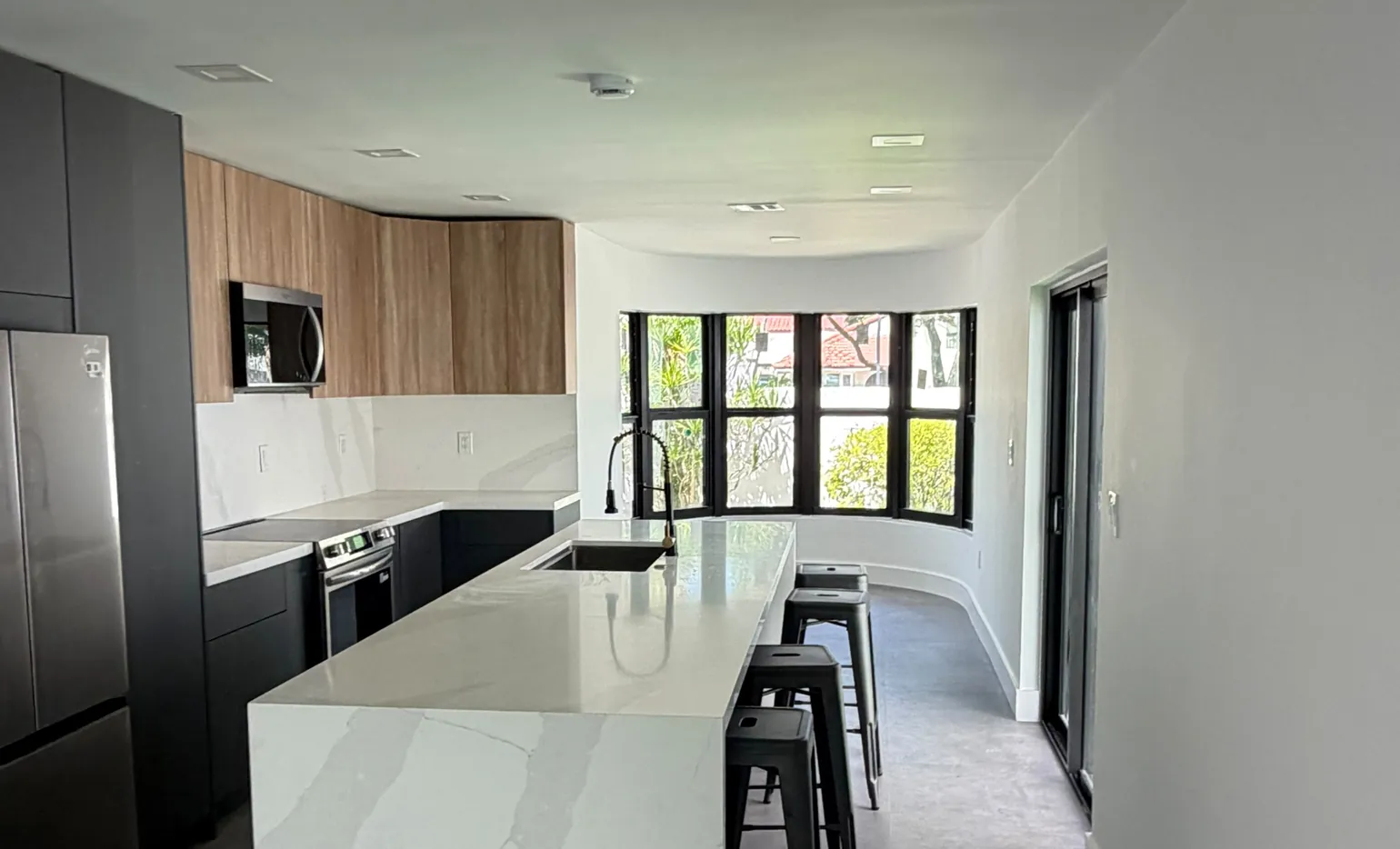
- Kitchen Remodeling
-
GXG Remodeling

-
17 Sep 2026
Cabinet Refacing vs. Cabinet Painting: Which Is Right for Your Kitchen?
Both options avoid the cost and mess of tearing out your cabinets. But most articles comparing them skip the one question that should come first: can your cabinets actually be painted in the first place? We'll cover that, plus real sourced costs, what actually makes a finish fail, and how to tell if your cabinet boxes are even worth building on.
Is Your Cabinet Even Paintable?
Before cost even enters the conversation, check what your cabinets are actually made of. Solid wood, wood veneer over a plywood or MDF box, and most painted-finish cabinets take a new coat of paint fine with the right prep. Rigid thermofoil, a vinyl film heat-and-vacuum-formed over MDF that became common in a lot of builder-grade kitchens from the 1990s through the 2010s, is the exception. The vinyl surface resists paint adhesion outright, so a straight repaint over it typically fails fast. The fix is either stripping the vinyl off with a heat gun before priming the exposed MDF, or skipping paint and going straight to refacing or door replacement.
The tell is visual and tactile: thermofoil has a perfectly uniform, seamless sheen with zero visible wood grain and a slightly plasticky feel, even on doors styled to look like wood. Real wood veneer shows actual grain variation between panels. If you're not sure which you have, that's the first question to ask a contractor, before getting quotes for a painting job that might not be the right job at all.
Cost Comparison
Cost guides for this topic vary wildly online, in part because a "professional painting" quote can mean two very different jobs. Here's how it typically breaks down for a standard kitchen.
Cabinet painting, basic recoat$425 to $1,500
Cabinet painting, full spray refinish$1,500 to $6,500
Cabinet refacing, professional$4,200 to $10,200
Full cabinet replacement$10,000 to $35,000+
These ranges are general industry ballparks, shown for education only, not a GXG quote. Every project is custom, so your real price comes from a free estimate.
The gap between a basic recoat and a full spray refinish is prep and coating quality, not marketing spin. A recoat keeps the existing color family and does minimal surface prep. A full refinish strips old finish, repairs the substrate, primes properly, and sprays a cabinet-grade coating in a controlled setting, which is what actually holds up. Refacing costs more than either painting tier because you're getting entirely new doors, drawer fronts, and box veneer, but it still lands well below full replacement, which is why it's often called the "middle" option.
DIY materials only run $200 to $600 for painting, or roughly $1,000 to $3,000 for refacing supplies. Refacing is the harder DIY project of the two: veneer adhesion typically needs a vacuum press most homeowners don't have access to, and a bad seal shows up later as lifting edges. These are general ranges, not a quote, and Miami-area pricing for smaller refacing jobs can run toward the lower end of the national range. Request a free estimate for pricing specific to your kitchen.
Cabinet Painting
The existing doors, drawer fronts, and boxes get cleaned, sanded, primed, and sprayed in a new color. It's the right call when the cabinets are structurally sound, they pass the paintability test above, and you just want a different look, like dated oak turned into a clean matte white. What most guides leave out is that "painting" covers a real range of coating quality, and that range is what actually determines how long it lasts.
Not All Cabinet Paint Is the Same
Ordinary wall or trim paint is the least durable option for a kitchen and the reason most DIY cabinet paint jobs chip within a couple of years. A step up, waterborne alkyd hybrids like Benjamin Moore Advance level out to a smooth, factory-like finish that resists chipping and doesn't yellow the way oil-based paint eventually does, though it needs weeks to fully cure. Catalyzed finishes, pre-catalyzed lacquer and, above it, post-catalyzed lacquer or conversion varnish, chemically cross-link into a harder, more moisture-resistant film than any paint, which is what professional cabinet shops typically spray. The finish matters more than whether the job is labeled "painting" or "refinishing."
Application method matters just as much. A sprayed coat applies thinner and far more evenly than a brushed one, with none of the buildup that collects at corners and door edges during brushing. That's also why hinges are the classic failure point: a door can't lie flat while it's being finished by hand, so paint runs to the low edge near the hinge and leaves an uneven, thin film exactly where daily opening and closing puts the most wear.
Cabinet Refacing
The boxes stay in place, but the doors and drawer fronts are replaced entirely with new ones, and any exposed box surfaces get a matching veneer. It's the right call when the doors themselves are warped, water-damaged, or too dated for paint to fix, or when you want a different door style or hardware layout, not just a different color. If you only dislike the door style and the boxes and drawer fronts are otherwise fine, door-only replacement is a lower-cost middle step between painting and full refacing worth asking about.
Refacing materials fall into three tiers, and the tier you choose changes both the price and how the job ages:
Thermofoil & laminate (per linear ft)$50 to $150
Wood veneer (per linear ft)$100 to $300
Solid wood (per linear ft)$200 to $500
Thermofoil and laminate are the cheapest and least durable, and neither can be refinished once damaged; wood veneer costs more but can be sanded and refinished over its life, typically lasting 15 to 20 years with proper care. The cabinet industry's own performance standard, ANSI/KCMA A161.1, tests certified cabinet finishes against hot-and-cold cycling and 24-hour chemical and detergent exposure before they're allowed to show no delamination, blistering, or discoloration, a real bar most refacing quotes never mention meeting or not.
Why Finishes Actually Fail
"Refacing lasts longer than painting" is the standard claim, but the real story is more specific: each option fails in its own particular way, usually traceable to prep, materials, or the coating tier, not to the refacing-versus-painting choice itself.
Painting Failure Modes
- Chipping at hinges & handles from skipped priming or grease left on the surface
- Hardware reinstalled before the finish fully cured, not just dried
- Yellowing on oil-based paint from heat and oxidation over time
- Peeling where steam from cooking works into an incompatible topcoat
Refacing Failure Modes
- Thermofoil lifting where adhesive softens near a range, oven, or dishwasher
- Veneer delaminating at edges when humidity swings outside a stable range
- Laminate chipping at edges, more common on thinner sheet stock
- Once thermofoil or laminate fails, it can't be repaired, only replaced
South Florida's humidity doesn't automatically favor one option over the other. It just means whichever you choose needs the right materials and full cure or bonding time before the kitchen goes back into daily use.
Test Your Cabinet Boxes First
Refacing only re-covers a box, it doesn't repair one, so a compromised box undermines the whole job no matter how good the new doors look. Before deciding anything, open every door and check:
- Press the interior side walls and back panel. Give or sponginess means moisture damage.
- Check face-frame joints where stiles meet rails. Gaps mean the frame has shifted.
- Pull a loaded drawer out fully. Racking or binding points to a failing drawer box.
- Check hinge screws. If they spin freely instead of biting in, the particleboard behind them has degraded.
Solid on all four, and refacing or painting are both realistic options. Fail any of them, and replacement is worth a serious look regardless of what it costs to reface.
Replacing Cabinets: When It Is the Right Call
Refacing and painting both build on the boxes you already have. Replacement is the right call when those boxes are the problem, or when you want a kitchen that is laid out differently. It is also the most expensive route and the only one that changes everything around it, so it helps to know the tiers and the trade-offs before you ask for quotes. Considering refacing? See our cabinet refacing service page, or our cabinet painting page if the boxes are sound.
Stock vs. Semi-Custom vs. Custom
These are typical reported ranges from published cabinet cost guides, per linear foot of cabinets and before installation, countertops, and demolition. They vary by brand, wood species, and region, so treat them as orientation rather than a quote.
Stock (per linear ft)$75 to $400
Semi-custom (per linear ft)$150 to $700
Custom (per linear ft)$500 to $1,500+
Stock cabinets come in fixed sizes and a limited set of finishes. Semi-custom adds size and finish options within a manufacturer's line. Custom is built to your exact dimensions, which matters most in kitchens with odd walls or unusual layouts. Lead times as commonly reported run from days to about 2 weeks for stock, roughly 3 to 8 weeks for semi-custom, and roughly 6 to 12 weeks for custom, and these can shift with supply conditions, so ask for a written lead time before you commit to a demolition date.
When the Boxes Fail
- Water damage under the sink or behind the dishwasher, where particleboard swells and crumbles once it has been wet
- Backs pulling away from sides, sagging shelves, or hinge screws that no longer bite
- A layout change, such as moving the range or sink, adding an island, or widening an opening, since refacing keeps the footprint exactly as it is
In South Florida, a slow leak under a sink is a common way a cabinet base fails without anyone noticing. If you find swollen or soft bases, the leak needs to be fixed and the damage assessed before any new cabinets go in. Our water damage repair page explains how we approach that.
The Countertop Catch
This is the point most comparisons bury: replacing cabinets generally forces new countertops, because the existing top is cut and fitted to the old boxes and rarely comes off intact or fits a new run. Refacing and painting leave the boxes in place, so your current countertop stays. That is a big part of why replacement lands at the top of the cost range above, and why a kitchen with countertops you still like points toward refacing or painting. If you are replacing cabinets, plan and price the new tops at the same time. See our countertop installation page for what that involves.
How to Tell Which One You Need
Paint If...
- Doors and boxes pass the health test, just the wrong color
- Your cabinets aren't rigid thermofoil, or you're okay stripping it first
- You like the current door style
- Budget is the top priority
Reface If...
- Boxes pass the health test but doors are warped, chipped, or water-damaged
- You want a different door style or hardware layout
- You want it to look new, not just repainted
- You have a lot of drawer bases and like the current layout
Resale Value & ROI
You'll see cabinet refacing or painting advertised with a "113% return on investment" figure. That number comes from Zonda's Cost vs. Value report for a Minor Kitchen Remodel, a bundled project that includes new cabinet doors alongside a new countertop, sink, faucet, and flooring, not refacing or painting on their own. Applying a bundled-project ROI to a cabinets-only job overstates what you'd actually recoup. A separate, differently-run survey from the National Association of Realtors and the National Association of the Remodeling Industry puts comparable kitchen work closer to 60% of cost recovered, using contractor and realtor-reported data instead of a cost-estimating database. No published report isolates a refacing-only or painting-only percentage, and treating either figure as an exact number for your specific project isn't accurate.
What both options do reliably is make a dated kitchen show better to buyers for a fraction of what a full remodel costs, and refacing in particular is the more visually convincing "new cabinets" impression of the two. That's the more honest way to think about payoff than quoting a bundled-project percentage as if it applies directly.
Before You Hire: Questions to Ask
Prep and cure time are what separate a job that lasts a decade from one that chips in six months, and neither shows up in a quote unless you ask. Before signing anything:
- Ask what coating or refacing material they use by name, not just "paint" or "veneer"
- Ask how long the finish needs to fully cure before hardware goes back on
- Be cautious of a bid well below every other quote, that's usually shortcuts, not a deal
- A large upfront payment before any work starts is a red flag; milestone payments are standard
- Get it all in writing, and confirm a real license number you can look up
Frequently Asked Questions
Is it worth it to reface kitchen cabinets?
Usually, yes, if the boxes pass the health test above: solid side walls, tight face-frame joints, and hinge screws that still bite. Refacing costs a fraction of full replacement, typically wraps in 3 to 5 days, and keeps your countertop in place. It's not worth it if the boxes are spongy, racked, or water-damaged. Refacing only re-covers a box, it doesn't fix one, so a compromised box undermines the whole job regardless of how good the new doors look.
How do I know if my cabinets can even be painted?
Most wood, wood veneer, and MDF cabinets can be painted with the right prep. Rigid thermofoil, the vinyl-wrapped finish common on many 1990s to 2010s builder-grade kitchens, is the exception: the vinyl resists paint adhesion, so it has to be stripped off with a heat gun before anything else, or the job should be refacing instead. Look for a perfectly uniform, seamless sheen with no visible wood grain and a slightly plasticky feel. If you see that, ask before assuming a straight repaint is even on the table.
How long does cabinet refacing take?
Most refacing jobs run 3 to 5 days for a typical kitchen. A basic recoat (same color family, light prep) can be faster than that; a full strip-and-spray refinish with a cabinet-grade coating usually takes 5 to 7 days including cure time between coats, longer than most people expect.
Do countertops need to be removed for cabinet refacing?
No. Refacing works around the existing countertop since the cabinet boxes never move. That's a big part of why it's faster and cheaper than full replacement, which usually does require removing and resetting the counters.
How long does a painted cabinet finish actually last?
It depends far more on the coating and the prep than on the fact that it's paint. A rushed job with basic paint and no primer can chip within months. A properly prepped job with a cabinet-grade catalyzed finish, sprayed rather than brushed, and given full cure time before hardware goes back on commonly holds up 8 to 12 years. The number one failure point either way is around handles and hinges, where grease, skipped priming, or rehanging doors before the finish has fully cured (not just dried) causes chipping right at the contact point.
Does refacing or painting actually increase my home's resale value?
There's no cost-vs-value study that isolates refacing or painting on its own. The widely quoted "113% ROI" figure is Zonda's Cost vs. Value report for a Minor Kitchen Remodel, a bundled project that includes new countertops, a sink and faucet, and flooring alongside new cabinet doors, so applying it to refacing or painting alone overstates the return. A separate NAR and NARI survey puts comparable kitchen work closer to 60% cost recovered. Realistically, either option makes a dated kitchen show better to buyers for a fraction of what a full remodel costs, which is the more honest way to think about the payoff.
Is refacing safer than painting in South Florida's humidity?
Not automatically. Painting can fail from humidity if the wrong topcoat goes over the wrong surface or steam works into the film over time. But laminate and thermofoil refacing have their own humidity failure mode: the adhesive bonding the material to the box can soften and lift, especially near a range, oven, or dishwasher. Wood veneer needs a stable 40 to 60% relative humidity range to stay bonded at the edges. The material and the installer's prep matter more than which category you pick.
Cabinet refacing vs. replacing: what is the cost difference?
As a general industry ballpark, not a GXG quote, using the ranges in this guide, professional refacing runs about $4,200 to $10,200, while full replacement runs about $10,000 to $35,000+ before counting new countertops. Replacement also adds countertop removal and a new countertop, which refacing and painting avoid. Treat these as general ranges, not a quote for your kitchen.
When should I replace cabinets instead of refacing them?
Replace when the boxes themselves have failed or no longer fit your plan: swollen or crumbling particleboard, water damage under the sink or dishwasher, sagging shelves, hinge screws that no longer hold, or a layout change such as moving appliances or adding an island. Refacing only re-covers the existing boxes, so it cannot fix any of those.
Do I have to replace my countertops if I replace my cabinets?
In most cases, yes. Countertops are cut and fitted to the existing cabinet layout, and removing the old boxes generally disturbs or breaks the top, so a new cabinet run usually means a new countertop. Refacing and painting leave the boxes and the countertop in place.
How long does it take to get replacement cabinets?
Published cabinet guides commonly report stock cabinets available within days to about 2 weeks, semi-custom at roughly 3 to 8 weeks, and custom at roughly 6 to 12 weeks, before installation. Actual timing depends on the manufacturer and current supply, so confirm a written lead time before you commit.
Not sure which fits your kitchen, or whether your cabinets are even paintable? Send us a photo and we'll tell you straight. See our cabinet painting or kitchen remodeling work, or call (786) 724-5571 for a free, honest opinion before you commit to either one.

Our testimonials say
What Homestead Homeowners
Are Saying
5.0 out of 5, based on 10 reviews
"GXG Remodeling repainted our whole exterior and it held up perfectly through the first rainy season. Clean job site, showed up on time every day."


"We had our kitchen cabinets painted instead of replaced and they look brand new. Saved us thousands and the crew was professional start to finish."

"Fast, honest, and the price matched the written estimate exactly. Would call GXG again for our next project."

"Professional from the first call to the final walkthrough. Our home looks brand new."
"Great communication throughout the whole project and the crew cleaned up every day before leaving."
"Would recommend GXG to anyone in Homestead looking for quality work at a fair price."