
Ceiling Water Stain in Florida: AC Leak, Roof Leak or Condensation?
Excellent on 
★ 5.0 out of 5 based on 10 reviews
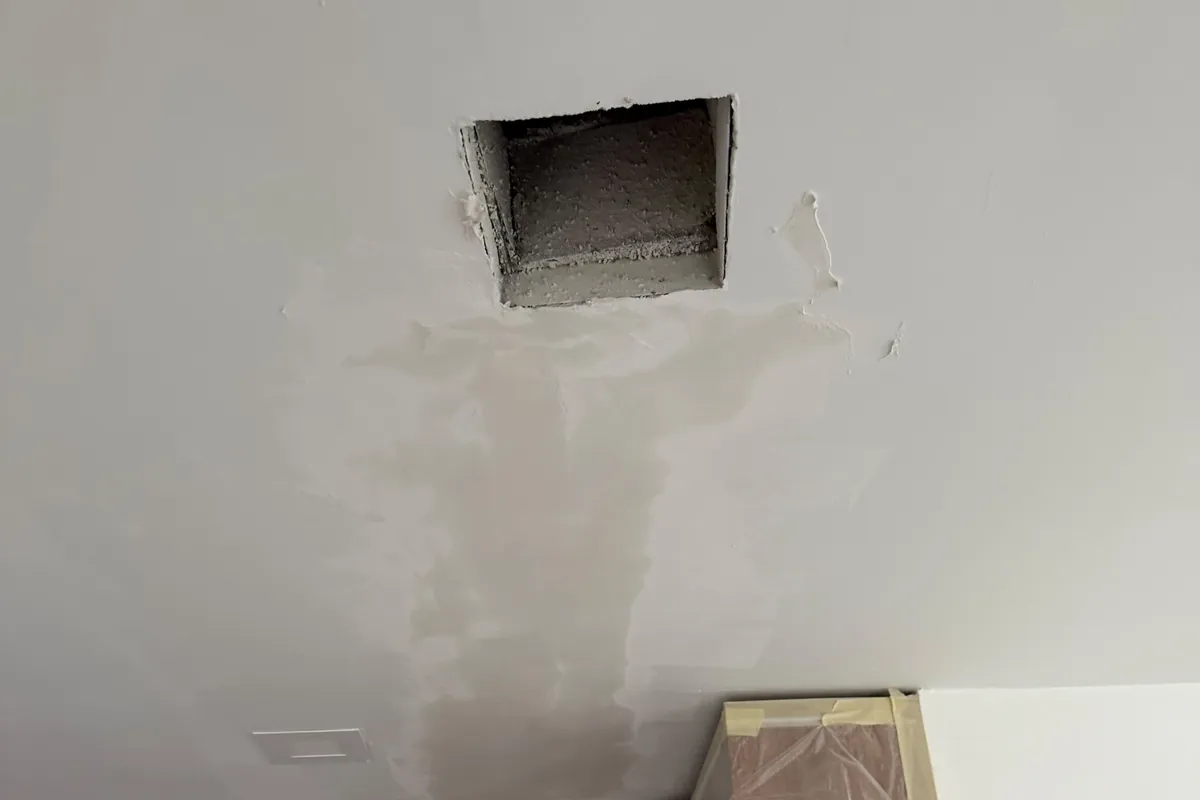
- Ceiling Repair
-
GXG Remodeling

-
27 Oct 2026
Ceiling Water Stain in Florida: AC Leak, Roof Leak or Condensation?
In Homestead and the rest of South Dade, a brown ceiling stain is most often an AC problem (a clogged condensate drain or a sweating duct), a roof leak that follows rain, or a leak from a pipe or bathroom above. The fastest clue is timing: if the stain grows when the AC runs, suspect the AC; if it grows after rain, suspect the roof. Stop the source first, let the area dry completely, then seal the stain with a stain-blocking primer and repaint. Painting first is the mistake that makes stains come back.
This is general guidance. Every house is different, and the ceiling is always the last step, never the first.
What to Do in the First Hour
Before you diagnose anything, make the situation safe and stop it from getting worse.
- Keep people out from under a sagging or bulging ceiling. Wet drywall is heavy and can hold trapped water. Do not poke it while standing underneath.
- Think about electricity. If water is near a light fixture, fan or outlet, turn off that circuit at the breaker and have an electrician check it before you use it.
- Stop the likely source if you can. Turn off the AC at the thermostat if the stain is near a vent or air handler. Shut off the water to a bathroom above if a pipe is suspected.
- Catch the water and take photos. Put a bucket and a towel down, then photograph the stain from several angles with a date. Photos help with any insurance conversation and show later whether the stain is growing.
Read the Clues: AC, Roof or Plumbing
No single clue is proof, but together they usually point the right way. Sources such as Bob Vila describe roof leaks as stains under a vent, chimney or other roof penetration that often appear after heavy rain, plumbing leaks as stains near or below a fixture or pipe, and HVAC stains as following the line of ductwork and showing up in hot weather. Here is the same idea as a quick table:
Stain appears or grows after rainRoof or flashing
Stain grows when the AC runs, near a vent or air handlerAC condensate or duct
Stain in a line along a duct runSweating duct
Stain below a bathroom, kitchen or laundryPlumbing or fixture
Droplets on the surface, random damp spotsCondensation or ventilation
Stain dry, no change over weeksOld leak, now stopped
These ranges are general industry ballparks, shown for education only, not a GXG quote. Every project is custom, so your real price comes from a free estimate.
Treat the table as a starting point for who to call, not a verdict. A stain can travel along a rafter or duct and show up several feet from where the water got in, and two causes can overlap.
AC Condensate Leaks and Sweating Ducts
In our climate an air conditioner removes a lot of water from the air, and all of it has to go somewhere. The coil drips into a pan, and a drain line carries the water outside. When that line clogs with algae, slime or debris, the pan can overflow into the ceiling below, especially when the air handler sits in the attic or a ceiling space. A float switch is designed to shut the system off when water backs up, and it should never be bypassed. The EPA's brief guide to mold, moisture and your home tells homeowners to keep AC drip pans clean and drain lines unobstructed and flowing properly.
The other AC cause is sweating. Cold ducts and air handlers in a hot, humid attic collect moisture on their surface, and if the insulation jacket is torn or the tape has failed, the insulation can get wet and drip onto the ceiling. The EPA also lists insulating cold surfaces as a way to prevent condensation.
The Florida Building Code's mechanical section calls for overflow protection where condensate could damage the building, using a secondary drain, an auxiliary pan or a water-level shutoff device. We are painters and remodelers, not AC technicians, so we cannot tell you whether your system meets code. Ask an AC contractor whether your unit has that protection and whether the drain line is rigid, sloped and clear. If the line clogs again and again, ask them to look at the cause instead of just clearing it.
Roof Leaks After Storms, and Plumbing From Above
South Florida roofs take a beating from wind-driven rain and storms during hurricane season, June 1 to November 30. Leaks tend to start at roof penetrations and transitions such as vents, chimneys, valleys and flashing, and on tile roofs the cause is often flashing or underlayment details, which a roofer must check. A stain that shows up in the same spot after every hard rain is the classic roof pattern.
The ceiling stain is rarely directly below the roof leak, because water follows framing before it drops. A roofer needs to find the actual entry point. Miami-Dade County is in Florida's High-Velocity Hurricane Zone, which has stricter roofing product and permit rules than most of the state, so ask any roofer whether your repair needs a permit and what product approvals apply.
If the stain is below a bathroom, laundry or kitchen, a plumber should look first. Common sources are failed shower pans, worn caulk, and leaking pipe connections. Plumbing is a likelier cause in a two-story home or a condo with a unit above. In a condo, report a leak from above to your association and the owner above as well, since the cause and the repair responsibility may sit with them.
A plumbing leak usually keeps running whether it rains or the AC cycles. A plumber can confirm it with proper tools.
Safe Attic Checks
If you have a reachable attic and are comfortable going up, a short check can tell you a lot. Attic heat in Florida is extreme in summer, so go in the morning and avoid midday. Step only on the framing and never on the drywall between joists. If you have any doubt, skip it and let a technician or inspector go up.
- Look directly above the stain. Wet, stained or compressed insulation over the stained spot tells you water is getting in or sitting there.
- Look at the air handler and duct runs. Check the drain pan for standing water, the drain line for a clog, and ducts for dripping, torn insulation jackets or failed tape.
- Look up at the roof deck. Dark staining, wet wood or daylight near vents and penetrations points to the roof. Do this during or soon after rain, from a safe spot.
Mold: What the EPA and CDC Say
EPA guidance on drying water-damaged areas
24 to 48 hours
The EPA says to dry water-damaged areas and items within 24 to 48 hours to prevent mold growth. In Homestead's humidity that window is a good reason to act quickly.
The EPA's guide says mold needs moisture to grow, and that cleaning mold without fixing the water problem means it will most likely return. It suggests keeping indoor relative humidity below 60 percent, ideally between 30 and 50 percent. For a moldy area smaller than about 10 square feet, the EPA's cleanup page says most people can usually clean it themselves, and it advises professional help for large growth or heavy water damage, for sewage or contaminated water, or if the HVAC system may be contaminated. See the EPA's mold cleanup page.
On health, the CDC says reactions vary from person to person. Some people get stuffy noses, sore throats, coughing or wheezing, burning eyes or skin rashes, and people with asthma, allergies, weakened immune systems or chronic lung disease can be affected more. The CDC also does not recommend routine mold testing to judge health risk. If you have health concerns, talk to a health professional. See the CDC's mold page.
Our role is repair and paint. Mold assessment and remediation are licensed services in Florida, and we do not perform them. If you see mold or smell it, stop, keep the area closed off, and call a licensed mold professional before anyone cuts or paints. We can repair the drywall and ceiling afterward. Paint labeled as mold killing is not a substitute for removal.
When Paint Over a Stain Fails
The brown color is residue the water carried to the surface, and ordinary water-based ceiling paint can let it bleed back through. Bob Vila's guide advises against putting latex paint directly over the stain and recommends an oil-based or shellac-based stain-blocking primer, tinted close to the ceiling color. Follow the label of whatever product you choose, and repair damaged drywall before priming.
Painting over a stain fails in three common ways:
- The leak was never fixed. The stain returns, often bigger. A stain that returns after repainting is a sign the source is still active.
- The ceiling was still damp. Primer and paint over damp drywall can blister and trap moisture. Dry to the touch is not the same as dry through; a moisture meter is the real test.
- Ordinary paint went on without a blocker. The brown ring can ghost back through.
Our own water damage repair page covers the repair order, and our interior painting cost guide explains how ceilings are priced and painted.
When Drywall Has to Be Cut Out
The rule of thumb is simple: firm, dry, solid drywall with only a stain can often be sealed, patched and repainted. Soft, sagging, bubbling or crumbling drywall has lost its strength and is cut back to dry, solid material and framing, then replaced, taped and finished. Wet insulation above it is replaced before the ceiling is closed. If damage is large or repeated, replacing a full section of the ceiling usually looks better than several patches. Our drywall repair and installation and ceiling repair pages describe how we approach it, and our drywall repair cost guide has the pricing detail.
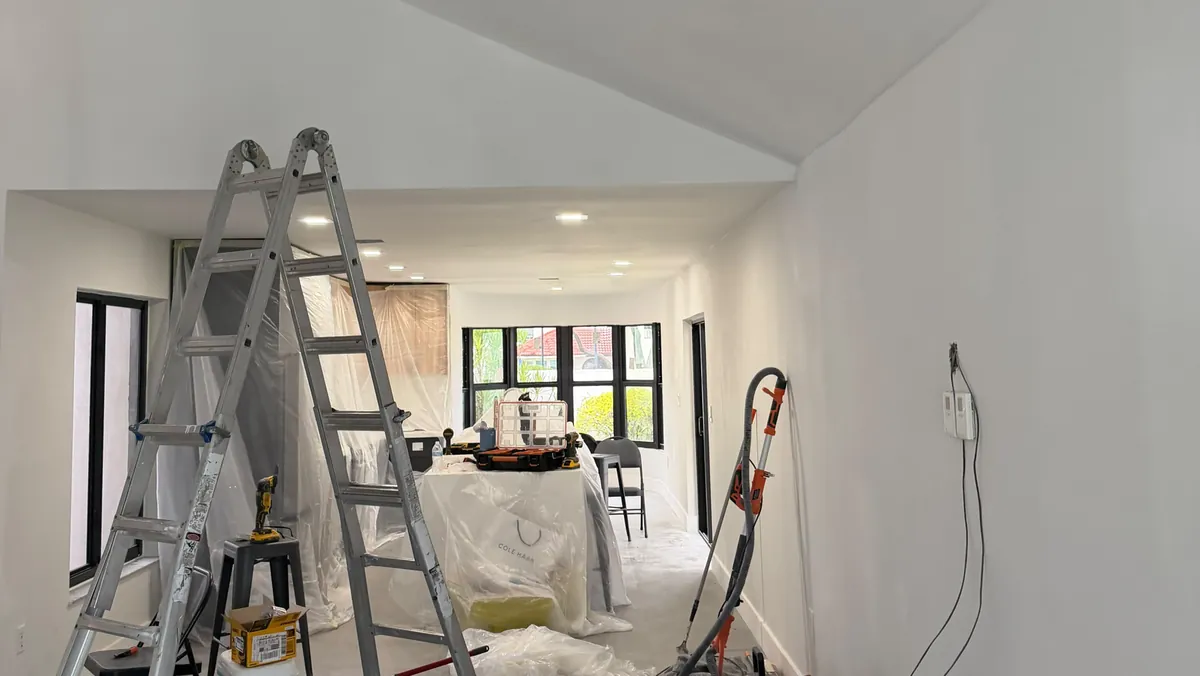
Many older South Florida homes have textured or popcorn ceilings, and matching a texture takes more skill than a smooth repair. If the home is older, the U.S. Consumer Product Safety Commission says asbestos may be present in textured paint and patching compounds used on wall and ceiling joints, and the EPA says sampling should be done by an accredited professional rather than yourself. Do not scrape, sand or cut a textured ceiling before it has been tested. Our popcorn ceiling removal guide explains the testing basics. We do not perform asbestos abatement.
Patching existing drywall usually does not need a permit, but rules differ by city, and roof, structural or electrical work can. Ask your building department, which has the final word for your address.
What the Repair Can Cost
The leak repair itself (AC, roofing or plumbing) is a separate trade with its own price, and we do not quote it. For the ceiling, here are general industry ballparks for education. They are not a GXG quote, and every project is custom, so your real price comes from a free estimate.
Ceiling repair, minor to water-damaged (market ballpark, see our drywall repair cost guide)$400 to $1,500 or more
Small patch, doorknob or nail pop size (market ballpark, see our drywall repair cost guide)$150 to $350
Larger damaged section needing a replacement piece (market ballpark, see our drywall repair cost guide)$350 to $700 or more
What moves the number: how much drywall and insulation have to be replaced, ceiling height and access, texture matching, whether the whole ceiling is repainted, and whether the leak was fully fixed first. Ask for repair-only pricing in writing with the scope itemized.
Questions to Ask Any Contractor
- Has the source of the water been found and fixed, and who confirmed it?
- How will you check that the ceiling is dry, with a moisture meter or by feel?
- Will you open the ceiling to check the insulation and framing above the stain?
- What happens if you find mold or hidden damage, and does the price change?
- Is the stain being sealed with a stain-blocking primer, and which product?
- How will the texture be matched, and will the full ceiling be repainted?
- Is the price itemized, with a clear change-order process for surprises?
Frequently Asked Questions
Why do I have a water stain on my ceiling but no leak?
Usually because the water is not leaking in the way people picture. In South Florida the common causes are condensation on a cold duct or air handler, a clogged AC drain line that overflowed once and then cleared, or an old roof or plumbing leak that has stopped. A stain that looks dry can still be a slow, intermittent leak that only shows up in certain weather or when the AC runs, so mark the stain's edge in pencil with a date and watch whether it grows.
Can HVAC cause water to leak through a ceiling?
Yes. The EPA's mold guidance specifically tells homeowners to keep AC drip pans clean and drain lines unobstructed. When the condensate drain clogs or a duct sweats, that water can soak the drywall below. The clue is timing: AC leaks tend to follow how much the system runs, roof leaks tend to follow rain.
Is it okay to paint over a water stained ceiling?
Only after the source is fixed and the material is fully dry and sound, and only with a stain-blocking primer first. Ordinary ceiling paint lets the brown stain bleed back through. If the drywall is soft, sagging or crumbling, or the stain keeps growing, painting over it only hides the problem.
When should I worry about a water stain on a ceiling?
Worry more if the ceiling is sagging or bulging, the stain is growing or appears after every rain, the area feels damp, there is a musty smell, or you see fuzzy or dark growth. Keep people out from under a sagging ceiling and call a professional. A small, dry, old stain with no change over time is much less urgent.
Does insurance cover water stains in a ceiling?
It depends on your policy and on the cause. Policies often treat sudden, accidental water damage differently from long-term seepage, wear or maintenance problems, and a deductible may be larger than a small repair. Take photos before anything is changed, report promptly, and ask your insurer directly before starting work. We cannot say what your policy covers.
How much does it cost to fix a water stain on a ceiling?
It depends on whether the ceiling only needs sealing and paint or needs drywall replaced. As a general industry ballpark, not a GXG quote, ceiling repairs commonly run $400 to $1,500 or more depending on how much water damage there is. That is an estimate, not a quote, and it excludes fixing the leak itself. Prices vary with materials, season and scope.
Does the ceiling need to be replaced after water damage?
Not always. Firm, dry drywall with only a stain can often be sealed and repainted. Drywall that is soft, sagging, bubbling or crumbling is usually cut out and replaced, and so is insulation above it that stayed wet. The EPA notes that porous materials such as ceiling tiles may have to be thrown away if they become moldy.
Who should I call first for a ceiling water stain?
Call whoever owns the likely source. An AC technician for a clogged drain line or sweating ducts, a roofer for a leak that follows rain, and a plumber for a leak near a bathroom or pipe. Call a ceiling repair contractor after the source is fixed and the area is dry, to repair and repaint.
A stain tells you something happened, not what is happening now. The most useful first step is finding the source, and the second is letting the area dry fully. Once that is done, we are glad to look at the ceiling, tell you honestly whether it needs sealing and paint or a section replaced, and give you a written, no-obligation estimate. See our ceiling repair work or call (786) 724-5571 when you are ready.
Related reading: water damage repair and drywall repair cost.

Our testimonials say
What Homestead Homeowners
Are Saying
5.0 out of 5, based on 10 reviews
"GXG Remodeling repainted our whole exterior and it held up perfectly through the first rainy season. Clean job site, showed up on time every day."


"We had our kitchen cabinets painted instead of replaced and they look brand new. Saved us thousands and the crew was professional start to finish."

"Fast, honest, and the price matched the written estimate exactly. Would call GXG again for our next project."

"Professional from the first call to the final walkthrough. Our home looks brand new."
"Great communication throughout the whole project and the crew cleaned up every day before leaving."
"Would recommend GXG to anyone in Homestead looking for quality work at a fair price."