
How Much Does Flooring Installation Cost in Homestead, FL?
Excellent on 
★ 5.0 out of 5 based on 10 reviews
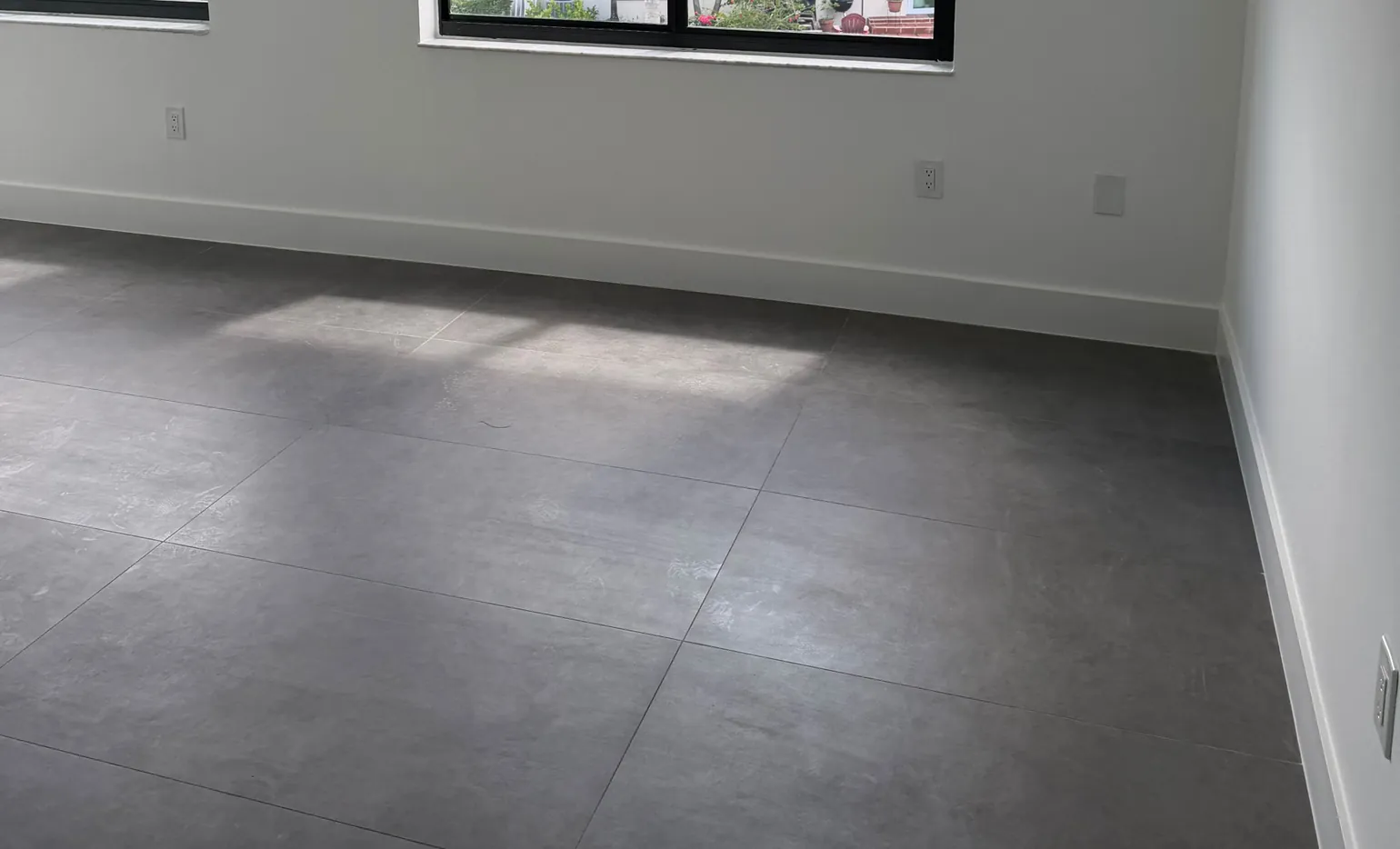
- Flooring Installation
-
GXG Remodeling

-
04 Oct 2026
How Much Does Flooring Installation Cost in Homestead, FL?
Flooring pricing depends mostly on material choice and what's underneath the old floor. In South Florida it also depends on something people rarely think to ask about: how much moisture is coming up through the concrete slab. This guide breaks down cost by material and by project size, what removal and prep add, how to protect a new floor from humidity, what condo owners need to know, and how to compare quotes. Cost ranges labeled as market ranges are general ballparks for education. Ranges labeled as reported come from named outside sources and are benchmarks, not quotes. Looking for tile specifically? See our tile installation cost guide instead.
Typical Cost Range
General Industry Ballpark
$2,000 to $8,000
A single room lands at the lower end. A full-home install with old-floor removal runs toward the higher end. The ranges below break down why.
Cost by Material
Material is the biggest lever on price. These are general market ballpark installed ranges (material and labor), not a GXG quote:
Luxury vinyl tile (LVT)$2 to $5 per sq ft
Luxury vinyl plank (LVP)$4.50 to $12 per sq ft
Laminate$3 to $8 per sq ft
Engineered hardwood$6 to $14 per sq ft
These ranges are general industry ballparks, shown for education only, not a GXG quote. Every project is custom, so your real price comes from a free estimate.
Tile and solid hardwood are not in that table because their prices swing the most with product and layout. For tile, see our tile installation cost guide. Solid hardwood is covered in the benchmarks below, along with a note on why it is a harder fit for South Florida slabs.
How Outside Cost Sources Compare
Because national and Miami-area sources publish different numbers, here is what the most visible ones report. Treat these as typical reported ranges, not Homestead quotes, and notice how wide they are.
Laminate, Miami installed (Best Laminate Flooring)$3.50 to $8.89 per sq ft
Laminate, national installed (Angi)about $3 to $13 per sq ft
Engineered hardwood, national installed (Angi)about $7 to $20 per sq ft
Solid hardwood, national installed (Angi)about $6 to $25+ per sq ft
Tile, installed (Floor & Decor)$5 to $15 per sq ft
Whole-home flooring, Miami (Bylder)$3,200 to $21,600, most near $8,600
Two cautions. First, the laminate and engineered hardwood ranges above fall inside these reported ranges, but sources disagree with each other, and a number from a flooring retailer's page may assume the cheapest product. Second, a Miami project typically splits into materials, removal and prep, and labor; Bylder's example breaks a roughly $8,600 job into about $3,900 to $4,800 materials, $900 to $1,300 removal and prep, and $2,600 to $3,500 labor. Use that as a sanity check on the shape of a quote, not as a price. Sources: Best Laminate Flooring, Angi, Floor & Decor, Bylder.
Cost by Project Size
Single room (under 300 sq ft)$1,300 to $3,600
Multiple rooms (300 to 800 sq ft)$3,000 to $9,600
Whole home (1,200+ sq ft)$5,400 to $14,400+
A quick way to sanity check: multiply your square footage by the per-square-foot range for your material, then add removal, subfloor work, trim, and waste. For example, 1,000 square feet of luxury vinyl plank at $4.50 to $12 works out to $4,500 to $12,000 before any of those extras.
Old Floor Removal & Subfloor Prep
Removing old flooring, whether it's carpet, old tile, or worn vinyl, along with leveling or repairing the subfloor underneath and adding transition strips between rooms, typically adds $150 to $700 to a project. The exact number depends on what's coming out and what condition the subfloor is in once it's exposed, which we check before finalizing a quote.
Tile is the outlier. Bonded ceramic or porcelain tile on a slab is slow, noisy, dusty work, and national sources report professional tile removal at $2 to $7 per square foot. A 300 square foot area at those rates reaches $600 to $2,100, so a large tile floor can run above the typical $150 to $700 range. The same sources list dumpster or debris disposal at $200 to $800 when it is not included in the quote, and subfloor repair or leveling at $3 to $10 per square foot where the surface underneath is damaged. Those are reported national figures, so ask any contractor for removal and disposal as their own lines. Sources: Angi, HomeAdvisor, HomeGuide.
Slab Moisture Testing & Vapor Barriers
This is the part most cost guides skip, and in South Florida it causes more floor failures than any other. Many homes here sit on a concrete slab, and older slabs may have no effective vapor barrier under them. Moisture can pass up through the concrete into any floor sealed on top of it. Flooring industry sources describe moisture rising through the slab, not spills from above, as what ends most laminate floors in South Florida, and slab moisture is also linked to vinyl or laminate edges curling and gaps opening.
The reliable way to know is to test before you buy flooring. The standard method for in-slab humidity is ASTM F2170, which uses probes set into drilled holes in the concrete to read relative humidity. A common testing guideline calls for at least three probes in the first 1,000 square feet and one more for each additional 1,000 square feet. Limits are set by the flooring and adhesive manufacturer: most floating luxury vinyl makers specify a maximum slab humidity somewhere around 75 to 85 percent, while standard pressure-sensitive adhesives are often rated near 75 to 80 percent. Some products tolerate more, and the product data sheet always governs. A second method, ASTM F1869, measures moisture vapor emission from the surface, and its limits are stated in pounds per 1,000 square feet per 24 hours.
If the reading is over the limit, the options are a moisture-mitigation coating or membrane on the slab, a vapor barrier or underlayment rated for it, a product with a higher stated tolerance, or a different material such as porcelain tile, which does not absorb moisture. Floating floors need the testing too: sealed vinyl over a damp slab traps vapor under the surface. Ask whether testing is in the quote, who does it, and what limit your chosen product allows. Sources: IFTI moisture limits for vinyl, F2170 information.
Humidity, Expansion Gaps & Material Choice
Luxury vinyl plank is fully water resistant, which matters in a climate with as much ambient humidity as South Florida, and it holds up better than laminate or solid hardwood in rooms near an exterior door or a kitchen. That's part of why it's become the most requested flooring materials in Homestead and the surrounding cities. Here is how each material generally responds:
- Luxury vinyl plank and tile: not damaged by humidity itself, but need a dry, flat slab and room to move.
- Porcelain tile: effectively non-absorbent, forgiving over slabs, and a common bathroom choice in Florida, but removal later is costly and the work is slower.
- Laminate: the most vulnerable over a slab because of its fiberboard core. Edge swelling and bubbling after moisture exposure is a frequent complaint in Florida forums. Water-resistant lines help but do not remove the need for a tested slab.
- Engineered hardwood: layered construction moves less than solid wood and is often recommended for humid regions, but it still needs a tested slab and controlled indoor humidity.
- Solid hardwood: the most sensitive to humidity swings, which can cause cupping and gaps. Many Florida retailers recommend engineered wood instead, and species choice matters for stability.
Floating floors need an expansion gap around the perimeter and at fixed objects so the floor can move with humidity and temperature. For laminate, the commonly cited gap is 1/4 to 3/8 inch, and the manufacturer's installation instructions set the actual requirement (and the warranty terms often depend on following it). Laminate makers generally target an indoor humidity range of about 30 to 50 percent, which in Homestead means keeping the AC running when the house is vacant. Baseboards and trim cover the gap, and the gap should never be caulked or filled. Sources: BestLaminate.
Leveling, Baseboards, Transitions & Furniture
These are the line items that make two quotes with the same per-square-foot price end up thousands apart:
- Subfloor leveling: slabs are rarely perfectly flat, and most click-lock floors have tight flatness tolerances set by the manufacturer. Low spots are filled with leveling compound, which must cure before the floor goes down. Skipping this is a common cause of hollow sounds, cracking, and separated joints.
- Baseboards and quarter round: when old baseboards come off to gain access or to set the expansion gap, they are either reinstalled or replaced. New trim costs more than reusing old trim, and painted trim needs touch-up paint. Ask which is in the price.
- Transitions: thresholds between flooring types or heights at doorways are usually a separate line. Flooring that does not match the height of adjacent floors needs a reducer or similar piece.
- Furniture moving: ask whether moving furniture is included and what is excluded. We move furniture within the work area as part of the job, and clearing rooms in advance on whole-home projects speeds things up. Heavy items, safes, pianos, and items needing disconnection may be handled differently, so confirm with whoever quotes the work.
Condo Rules: Sound Underlayment & HOA Approval
If you own a condo, check with your association before you buy anything. Many buildings require written approval before hard-surface flooring replaces carpet, and some require a sound-rated underlayment. The Florida Building Code adopts the International Building Code sound provisions: floor and ceiling assemblies between dwelling units are expected to reach an Impact Insulation Class (IIC) of at least 50, or 45 if field tested. IIC measures how well a floor assembly blocks footstep noise; STC measures airborne sound. Bare concrete alone typically rates far lower (roughly IIC 25 to 35), so hard flooring needs an acoustic underlayment to close the gap, and field tests tend to come in a few points below lab ratings.
What this means for your project: ask your association what rating it requires, whether it wants a manufacturer's test report for the specific floor and underlayment combination, and whether there are limits on work hours, elevator reservations, or insurance certificates. Underlayment adds thickness, which can affect door clearances and transitions, and adds cost. Your building's rules, not a general code summary, control what you need to submit. Sources: Commercial Acoustics IIC and STC guide, Acoustical Solutions on the Florida Building Code.
Waste Factor & Hurricane-Season Lead Times
Flooring is ordered with extra for cuts, waste, and future repairs. Common guidance is about 10 percent extra for straight-lay rectangular rooms, 15 percent or more for L-shaped rooms or diagonal layouts, and more for herringbone or large-format tile. Hardwood is often quoted at a lower figure for straight installs. Keep a few spare boxes from the same production lot for repairs, because a later lot may not match in color. Ask whether your quote's square footage already includes waste so you do not pay for it twice.
The Atlantic hurricane season runs from June 1 to November 30. We cannot promise product availability or delivery dates, but a storm threat can tighten supplier stock and crew schedules, and shipping from outside Florida can stretch. Ask your supplier for stock and ship dates in writing, confirm that all boxes come from one lot, and avoid starting flooring right before a forecast storm, since materials need to acclimate and a flooded or windblown job site is a bad place to leave open boxes. Sources: Tile Shoppes on waste.
How to Compare Flooring Quotes
Quotes that look similar by square foot can differ by hundreds or thousands once the extras are counted. Ask each contractor to write down:
- Material, product line and thickness, wear layer, and warranty terms (and who is giving the warranty: the manufacturer, the installer, or both)
- Whether slab moisture testing is included, and what limit applies to the product
- Old-floor removal and disposal, as separate lines
- Subfloor leveling and repair, including what happens if more is found after demolition (a change order)
- Underlayment type, including sound rating if you are in a condo
- Baseboards, quarter round, and transitions: reuse or replace, and who paints
- Furniture moving and appliance handling
- Waste percentage and square footage used, and who orders the material
- Start date, expected duration, and payment schedule
Big-box retailers publish project pricing too, so compare scope as well as price. For example, Home Depot's Miami laminate installation page lists example project costs from about $1,052 to $4,458 depending on the job, which shows how much scope changes the total. Get at least three itemized bids when you can. Source: Home Depot.
Common Complaints and How to Avoid Them
- Edges curling, cupping, or swelling after a year or two: usually slab moisture or no expansion gap. Test the slab, follow the manufacturer's gap, and keep indoor humidity controlled.
- Hollow sound, cracking, or shifting joints: usually an unprepared subfloor. Insist on flatness checks and leveling before installation.
- Gaps opening between planks: often humidity swings, an undersized perimeter gap, or heavy fixed objects like islands pinning a floating floor. Ask how cabinets and islands will be handled.
- Quote creep: extras that were not in the original price. Get removal, prep, trim, and transitions itemized up front.
- Surprise noise complaints from downstairs neighbors in condos: no sound-rated underlayment. Confirm requirements before ordering.
- Unexpected mess: tile removal creates dust and noise, so ask about dust control, protection of adjoining rooms, and cleanup.
Permits & Timeline
Flooring installation is cosmetic work and doesn't require a Miami-Dade County permit for a typical single-family home. Condos and townhomes may need association approval even when the county does not. A single room typically takes 1 to 2 days. A whole-home installation of 1,200 to 2,000 square feet usually runs 3 to 6 days, longer if old flooring removal, slab moisture work, or subfloor repair comes first.
Frequently Asked Questions
How much does flooring installation cost in Homestead, FL?
As a general market ballpark, not a GXG quote, flooring jobs commonly fall between $2,000 and $8,000 for a typical room-sized to whole-home project, depending on material and square footage. Luxury vinyl plank, the most popular choice for homeowners, typically runs $4.50 to $12 per square foot installed.
How much does it cost to install 1,000 square feet of flooring?
Using the general market ballpark ranges in this guide, 1,000 square feet runs about $2,000 to $5,000 for luxury vinyl tile, $4,500 to $12,000 for luxury vinyl plank, $3,000 to $8,000 for laminate, and $6,000 to $14,000 for engineered hardwood. Old-floor removal, subfloor work, trim, and waste are on top of or alongside those figures depending on how a quote is written, so ask for them as separate lines.
What's the cost difference between vinyl plank, vinyl tile, and laminate?
As a general industry ballpark, not a GXG quote, luxury vinyl plank (LVP) runs $4.50 to $12 per square foot installed and is the most popular choice for its water resistance and wood-look finish. Luxury vinyl tile (LVT) typically runs $2 to $5 per square foot. Laminate runs $3 to $8 per square foot. Both vinyl options cost less than solid hardwood while holding up better to South Florida humidity.
Does removing old flooring add to the cost?
Yes. Removing old flooring, repairing or leveling the subfloor underneath, and installing transition strips between rooms typically adds $150 to $700 to a project, depending on what's being removed and the subfloor's condition once it's exposed. Large areas of bonded tile can cost more: national sources such as Angi and HomeAdvisor report $2 to $7 per square foot for professional tile removal.
Is laminate flooring good in Florida?
It can work in dry, conditioned rooms, but it is the least forgiving option over a concrete slab. Laminate has a fiberboard core that swells when it takes on moisture, and in South Florida the moisture that ruins a laminate floor usually rises through the slab rather than spilling from above. Waterproof or water-resistant laminate exists, but slab moisture still needs to be tested and the manufacturer's installation rules followed.
Do you need a moisture barrier for laminate or vinyl flooring on concrete?
Usually yes, and the manufacturer's instructions decide what kind. Most laminate needs an underlayment with a vapor barrier over concrete, and most floating vinyl makers set a maximum slab moisture level. The slab should be tested before installation, and if readings are above the limit the slab needs a moisture-mitigation product or a different flooring choice.
What is the best flooring for Florida homes?
For most South Florida homes over a slab, porcelain tile and luxury vinyl plank are the safest picks because neither is damaged by humidity itself. Engineered hardwood can work in conditioned homes with a tested slab. Solid hardwood and laminate carry the most moisture risk. The right answer depends on the room, the slab, and your budget.
Is it better to remove old tile or install over it?
Some flooring can be installed over existing tile if the tile is solidly bonded and the surface is made flat, but grout lines and uneven tiles telegraph through thin flooring and the added height creates trouble at doors and transitions. Removing tile costs more up front and is messy, but it gives a clean base and lets us check the slab. We decide after seeing the floor.
What are the downsides of luxury vinyl plank?
LVP is not harmed by humidity itself, but moisture trapped beneath it can cause problems, so slab moisture still matters. It can dent under heavy point loads, it expands and contracts with temperature, and some people simply prefer the look and resale feel of tile or real wood. Quality varies widely between product lines, so look at the wear layer and the manufacturer's installation requirements, not only the price.
Do I need a permit for flooring installation in Miami-Dade County?
For a typical single-family home, no. Flooring installation is cosmetic work and doesn't require a permit in Miami-Dade County, whether it's vinyl plank, laminate, or another floating or glue-down material. Condos are different: your association will likely require approval and may require a sound-rated underlayment, so ask the building before ordering materials.
How long does flooring installation take?
A single room typically takes 1 to 2 days. A whole-home installation of 1,200 to 2,000 square feet usually runs 3 to 6 days, longer if old flooring removal, slab moisture work, or subfloor repair is needed first.
Is vinyl plank a good choice for a humid South Florida home?
Generally, yes. Luxury vinyl plank is fully water resistant and handles humidity better than laminate or solid hardwood, which is part of why it's become the most requested flooring materials in South Florida homes. It still needs a flat, dry slab underneath it.
A national flooring calculator doesn't know what's under your old floor or how your rooms are laid out. The only estimate worth planning around is one written after someone has actually measured your space. See our flooring installation work or call (786) 724-5571 for a written, no-obligation estimate.
Planning a larger project? See kitchen remodeling and tile installation cost.

Our testimonials say
What Homestead Homeowners
Are Saying
5.0 out of 5, based on 10 reviews
"GXG Remodeling repainted our whole exterior and it held up perfectly through the first rainy season. Clean job site, showed up on time every day."


"We had our kitchen cabinets painted instead of replaced and they look brand new. Saved us thousands and the crew was professional start to finish."

"Fast, honest, and the price matched the written estimate exactly. Would call GXG again for our next project."

"Professional from the first call to the final walkthrough. Our home looks brand new."
"Great communication throughout the whole project and the crew cleaned up every day before leaving."
"Would recommend GXG to anyone in Homestead looking for quality work at a fair price."