
How to Hire a Contractor in Florida and Verify a License Before You Sign
Excellent on 
★ 5.0 out of 5 based on 10 reviews

- Hiring a Contractor
-
GXG Remodeling

-
06 Nov 2026
How to Hire a Contractor in Florida and Verify a License Before You Sign
To hire a contractor in Florida, look the person up on the state's license portal at MyFloridaLicense.com (run by the Department of Business and Professional Regulation, DBPR), confirm the license is current and active and covers your kind of work, and make sure the name on the license matches the name on your contract. Then get proof of insurance, a written contract that shows the license number, and payments tied to finished work. One catch: Florida does not license every trade, so the job itself decides what license it needs.
This guide covers that check, what Miami-Dade adds locally, and how deposits, permits and liens work. It is general consumer information, not legal advice. Statute citations are to the 2026 Florida Statutes online, and rules and phone numbers change, so confirm anything important with DBPR, the county or your building department. Planning a bigger project? See kitchen remodeling and bathroom remodeling.
The Five-Minute License Check
Do this before you sign anything or pay a deposit. It costs nothing.
- Get the details in writingAsk for the full name, business name and license number. Florida requires the number to appear in each offer, bid, proposal, contract or advertisement (section 489.119). A quote without one is your first question.
- Open the state portalGo to MyFloridaLicense.com, choose Verify a Licensee, and search by license number, name, city or county, or license type. The Customer Contact Center at 850-487-1395 can help.
- Read the whole recordCheck the name, the license type, a current and active status, and any listed discipline or complaints. Florida treats someone working on an inactive or suspended license as unlicensed (section 489.127).
- Tie the company to a qualifierA company has no contractor license on its own. It needs a licensed qualifying agent for the scope of work (section 489.128). Ask who that is and whether that person oversees your job.
- Do not accept a tax receipt as a licenseA local business tax receipt lets a business operate in a city or county. It is not a contractor license.
What the License Type Tells You
Under Chapter 489, a certified contractor holds a state certificate of competency and can contract anywhere in Florida. A registered contractor met one local jurisdiction's requirements and may work only in that jurisdiction (section 489.105). Then the category sets the scope:
- GeneralUnlimited as to the type of work, subject to the statute's exceptions.
- BuildingCommercial buildings and residential buildings up to three stories, plus remodeling or repair that does not affect structural members.
- ResidentialOne-, two- or three-family homes up to two habitable stories over one uninhabitable story, plus accessory structures.
- Trade licensesRoofing, plumbing, mechanical and air conditioning, pool and spa, and others are licensed separately.
You want a match: a license for the work in your contract, held by or tied to the business you pay.
Miami-Dade and Homestead Local Rules
Miami-Dade licenses its own contractors under Chapter 10 of the County Code, through the Construction Trades Qualifying Board. License types include Building, Building Specialties, Electrical, Maintenance, Mechanical and Plumbing. To check one, use Miami-Dade County's Contractor Inquiry and Complaint Search or call Contractor Licensing at 786-315-2880. It covers county-licensed contractors only, so state-licensed ones show up on the DBPR portal instead.
Your city matters too. The City of Homestead's posted forms say contracting firms with a Homestead business tax receipt must register annually, and that a permit application needs a current license, current insurance and notarized signatures from the owner and the qualifier. Those documents are dated 2023 and 2024, so call Development Services at 305-224-4500 to confirm. In Florida City or unincorporated South Dade, ask which permit office covers your address. Source: City of Homestead contractor registration form.
Which jobs need a license at all? Under section 489.117, a local government may not require a license for a job scope outside the state's contractor categories. The statute's examples include painting, flooring, cabinetry, handyman services, tile and stone installation, plastering, stuccoing and pressure washing. Interior remodeling counts only when no task in the project requires a state license, so moving a sink or adding a circuit brings in a licensed plumber or electrician. An unlicensed painter is not automatically a red flag. A painter offering to rewire a fixture is. For smaller painting jobs, see our interior painting page.
Insurance and Workers' Compensation
- General liabilityAsk for a certificate sent directly from the contractor's insurance agent, not a screenshot. Check the policy dates, and ask whether you can be listed as certificate holder.
- Workers' compensationFlorida's Division of Workers' Compensation says construction employers with one or more employees, including non-exempt owners, need coverage. Officers may hold a construction exemption, but employees still need coverage.
- Check the databasesThe division keeps a Proof of Coverage database and an Exemption Search database. Ask for a printout or look it up yourself.
- Ask about subcontractorsThe division says a contractor becomes responsible for benefits if a subcontractor's worker is uninsured, so ask who is coming and how coverage is confirmed. Source: Division of Workers' Compensation FAQ.
What the Contract Should Say
A good contract is specific enough that a stranger could finish your job from it. Look for:
- Names and numbersLegal name, business name, address and a license number that matches DBPR.
- Scope and materialsWhat is included and excluded, with materials by brand, model, size and color.
- Price and paymentsThe total, the deposit, and what finished work triggers each payment. Make the last one follow a walkthrough.
- Dates, permits and changesStart and finish dates, who pulls permits, and signed change orders before extra work.
- Required noticesDirect contracts over $2,500 on homes up to four units must carry the boldfaced construction lien notice (section 713.015). Residential contracts over $2,500 must also include the recovery fund statement (section 489.1425).
- Warranty in writingWho gives it, what it covers and for how long.
Deposits: What Florida Law Says
Section 489.126, residential work
10% / 30 days / 90 days
An initial payment above 10 percent of the price starts a 30-day clock to apply for permits and a 90-day clock to start work after they issue. It is a trigger, not a limit.
The 10 percent figure is often repeated as a deposit cap. It is not. Under section 489.126, a contractor who receives an initial payment above 10 percent of the price must apply for needed permits within 30 days (unless the work needs none) and start within 90 days after permits issue, unless it has just cause or you agree in writing to longer. That section sets no percentage cap, so deposit size is negotiable.
If the contractor misses those deadlines, the statute directs a written demand by certified mail, return receipt requested, to the address in the contract. A contractor who has received more than the value of the work also may not stop work for any 90-day period. Penalties scale with the amount received, from a first-degree misdemeanor under $1,000 to a first-degree felony at $200,000 or more. Practically: keep the first payment modest, tie later payments to finished stages, and never pay in full ahead of the work.
Permits, Liens and Releases
A building department must require a contractor who takes out a permit to give a registration or certification number (section 489.119), and proceeding without required permits and inspections is a listed ground for disciplining a licensed contractor (section 489.129). Ask whether a permit is needed, who is pulling it, and for the permit number. Be careful if a contractor suggests you pull it as an owner-builder. That exemption is for owners acting as their own contractor and personally supervising the work (section 489.103), and it puts the responsibility on you. Which jobs need permits is covered in our Miami-Dade remodel permit guide.
Liens are the other half of this. Under Florida's construction lien law, unpaid subcontractors and suppliers can claim against your property even if you paid your contractor in full. That is why section 713.015 puts the warning in your contract and recommends requiring a written release of lien before each payment. The owner or the owner's agent must record a Notice of Commencement with the Clerk before work starts (section 713.13 requires it, except for jobs of $2,500 or less under section 713.02), and Homestead's checklists say it must be in place by the first inspection. Keep every Notice to Owner you receive, ask for lien releases with each payment, and ask for the contractor's final payment affidavit before the last check. The statute itself recommends consulting an attorney.
South Dade Homes
Many South Dade homes are concrete block with stucco on a slab, in a humid climate with a long hurricane season. Miami-Dade sits in the High-Velocity Hurricane Zone, which layers stricter provisions onto the Florida Building Code, so work touching windows, doors, roofs or structure deserves a permit conversation before you sign.
- HOA and condo rulesMany communities require approval before work starts. Get it in writing.
- Flood zonesIf your home is in a mapped flood zone, ask the building department whether it adds requirements to a larger remodel.
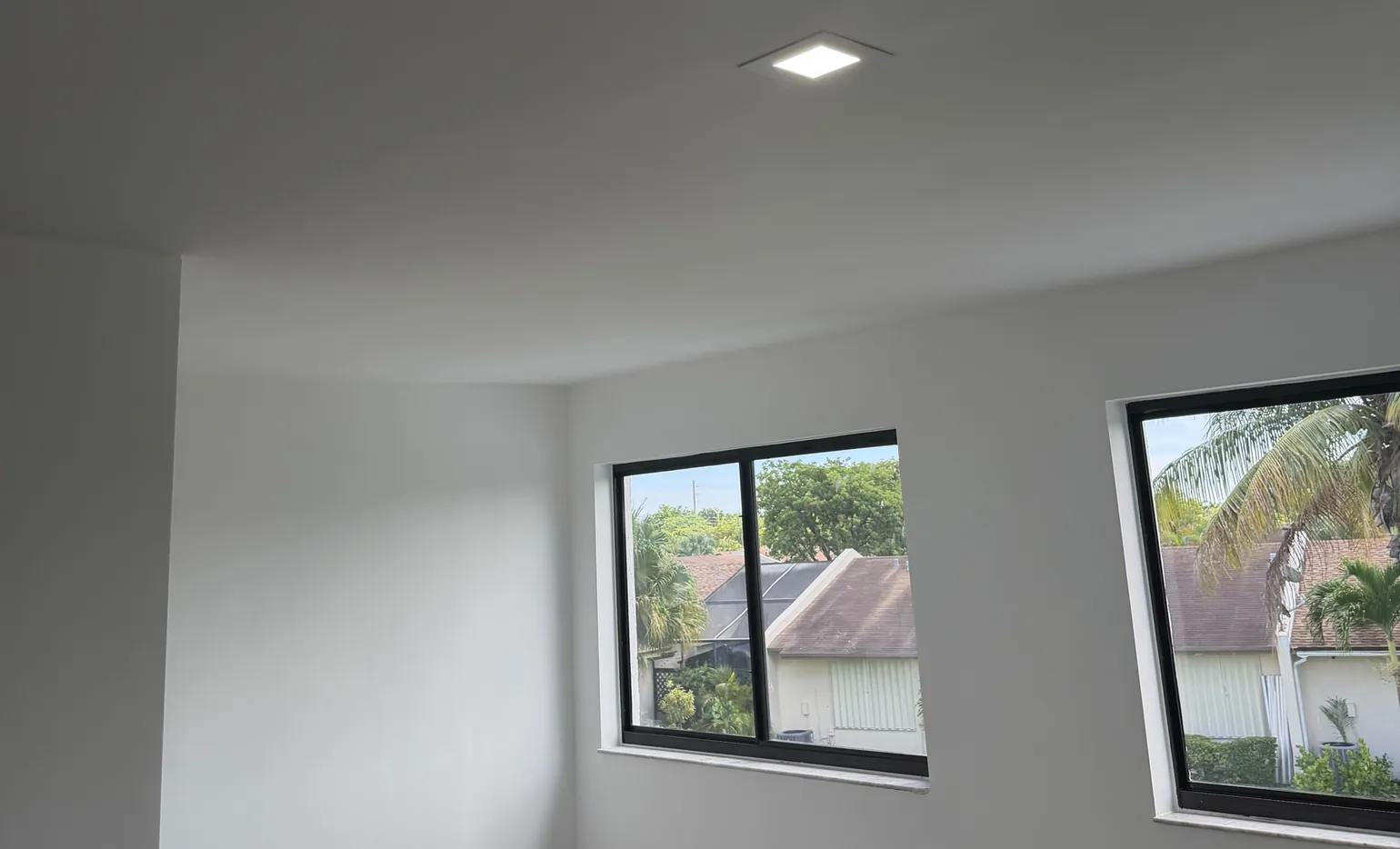
- Older ceilings and finishesOn older popcorn ceilings, ask how the contractor handles testing before anything is scraped, and who does the work if a problem turns up.
- After a stormUnlicensed contracting during a declared state of emergency is a felony, so verify any out-of-area crew as carefully as a local one.
Red Flags and Questions to Ask
- No license number on the quoteOr one that does not match the DBPR record.
- Pressure to sign or pay todayA fair price survives a day of checking.
- Payment before paperCash only, no written scope, or a large payment before permits are applied for.
- 'You do not need a permit'Sometimes true, often not. Ask the building department yourself.
- A borrowed licenseA licensed contractor may not knowingly let an unlicensed person use a number (section 489.127).
- A price far below every other bidThat is advice, not law, but it often means a different scope or missing insurance.
Then use these questions with every bidder and write the answers down.
- What is your license number, and who is the qualifier?Then check both yourself.
- Can your agent send proof of liability and workers' compensation?Check dates and subcontractor coverage.
- Who pulls the permit, and what is the number?Look it up with the building department.
- What triggers each payment?Final payment after a walkthrough.
- Will you provide lien releases with each payment?Ask about the Notice of Commencement too.
- What warranty do you give in writing?Who gives it and for how long.
If Something Goes Wrong
- Report unlicensed activityDBPR takes reports at 1-866-532-1440, which can be anonymous, and says it can fine unlicensed people but cannot get restitution for you. Source: DBPR unlicensed activity page.
- Complain about a licenseUse the county search above for Miami-Dade licenses, or DBPR's File a Complaint option for state ones.
- Use the recovery fundIt may pay up to $100,000 per claim for general, building and residential contractors and $30,000 for other categories on contracts signed on or after July 1, 2024, but only after a judgment, award or board order, only for specified violations by a licensed contractor, and generally within one year of the end of the case (section 489.143).
- Talk to an attorneyLiens and contract disputes have deadlines, so do it early.
Frequently Asked Questions
How do I verify a contractor's license in Florida?
Go to MyFloridaLicense.com, choose Verify a Licensee, and search by license number, name, city or county, or license type. Check that the name matches your paperwork, the license type fits the work, the status is current and active, and a qualifying agent is tied to the business. You can also call the DBPR Customer Contact Center at 850-487-1395. For a Miami-Dade local license, use the county's Contractor Inquiry and Complaint Search or call 786-315-2880.
Is it illegal to hire an unlicensed contractor in Florida?
The criminal penalties in Chapter 489 are aimed at the person who contracts without the required license, not at the homeowner. The risk to you is practical. An unlicensed contractor cannot enforce the contract and has no lien rights, but the Homeowners' Construction Recovery Fund only covers losses caused by licensed contractors. Check the license first.
Do all contractors in Florida need a license?
No. Florida licenses defined categories such as general, building, residential, roofing, plumbing, mechanical and air conditioning. Section 489.117 says local governments may not require a license for job scopes outside those categories, and it lists painting, flooring, cabinetry, handyman services, tile and stone installation, plastering, stuccoing and pressure washing as examples. Interior remodeling counts only when no task in the project needs a state license.
Can a contractor work under someone else's license in Florida?
Section 489.127 bars a licensed contractor from knowingly letting an unlicensed person or business use a license number. A company can legitimately work under a licensed qualifying agent, and a true employee of a licensee can act within that license. Ask who the qualifier is and confirm that person on the DBPR record.
What is the penalty for contracting without a license in Florida?
Under section 489.127, a first offense is a first-degree misdemeanor. A second offense, or any offense during a Governor-declared state of emergency, is a third-degree felony. These penalties are in addition to civil remedies.
How much deposit is legal for a contractor in Florida?
Section 489.126 sets no percentage cap. It sets a trigger: if a contractor takes an initial payment of more than 10 percent of the price on residential work, it must apply for needed permits within 30 days and start work within 90 days after the permits issue, unless it has just cause or you agree in writing to longer. Negotiate the schedule and tie payments to finished stages.
What is the Florida Homeowners' Construction Recovery Fund?
As a general industry ballpark, not a GXG quote, it is a state fund that may pay a homeowner who loses money because of specified violations by a licensed contractor. You generally need a court judgment, arbitration award or board order first. Under section 489.143, for contracts signed on or after July 1, 2024, payment is capped at $100,000 per claim for general, building and residential contractors and $30,000 for other categories.
A license check takes minutes and is the cheapest protection on any project. If you are weighing bids for a kitchen, bathroom, painting or repair job in Homestead or South Dade, we are glad to walk through scope, permits and payment terms in writing before you commit. Read our reviews, learn about GXG Remodeling, see how to compare scope in our kitchen remodel cost guide, or call (786) 724-5571 for a written, no-obligation estimate.

Our testimonials say
What Homestead Homeowners
Are Saying
5.0 out of 5, based on 10 reviews
"GXG Remodeling repainted our whole exterior and it held up perfectly through the first rainy season. Clean job site, showed up on time every day."


"We had our kitchen cabinets painted instead of replaced and they look brand new. Saved us thousands and the crew was professional start to finish."

"Fast, honest, and the price matched the written estimate exactly. Would call GXG again for our next project."

"Professional from the first call to the final walkthrough. Our home looks brand new."
"Great communication throughout the whole project and the crew cleaned up every day before leaving."
"Would recommend GXG to anyone in Homestead looking for quality work at a fair price."